Before Buying a Second-Hand Car, Always Check Its Accident History
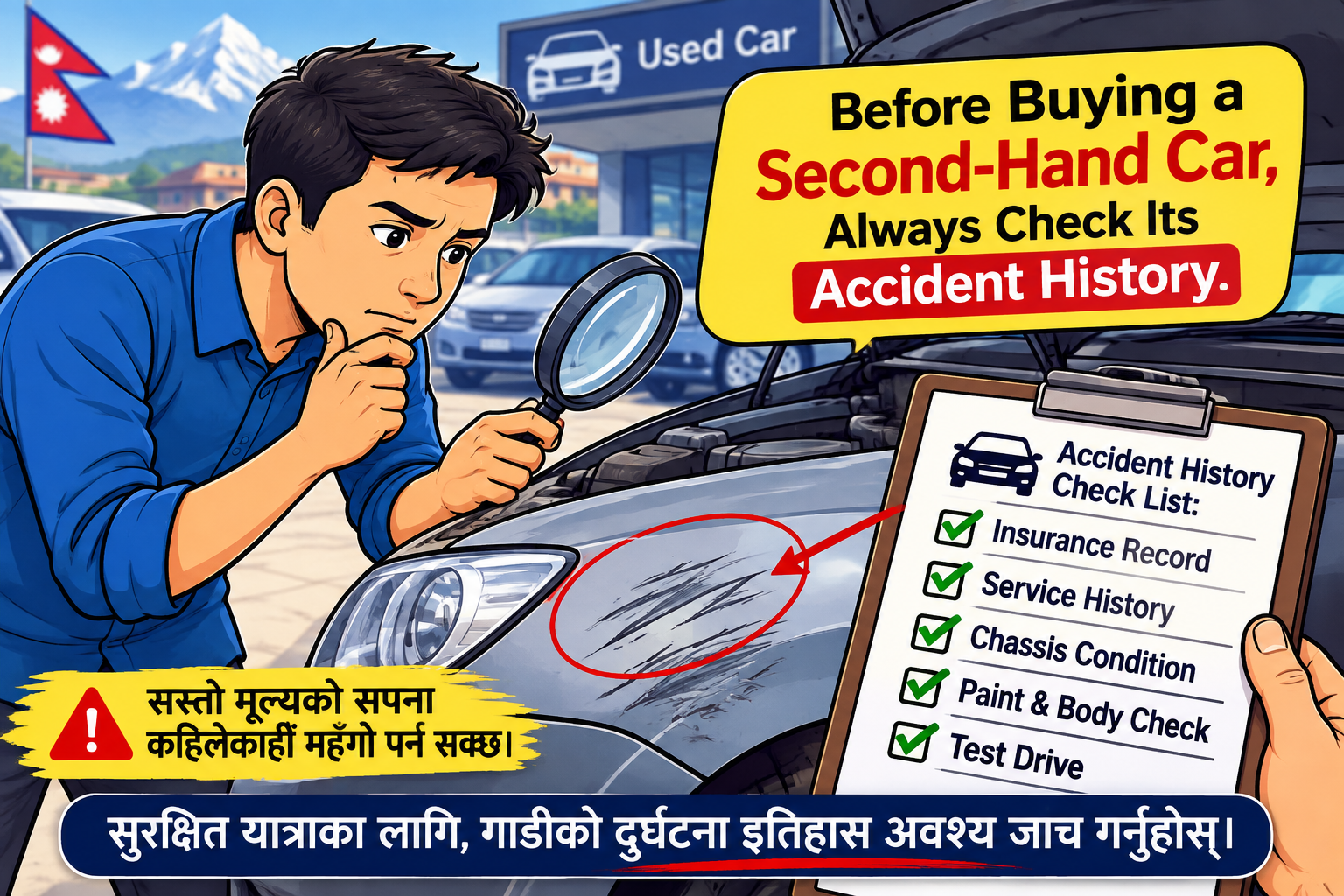 The demand for second-hand cars in Nepal has grown rapidly over the last few years. Rising vehicle prices, increasing taxes, and the desire for affordable personal transportation have encouraged many Nepalis to explore the used car market.
Whether you are looking for a hatchback for city driving, a family SUV, or a reliable sedan, a second-hand vehicle can offer excellent value. However, there is one critical factor that many buyers overlook: the accident history of the vehicle.
A shiny exterior, polished interior, and attractive price can sometimes hide a troubled past. A car that has been involved in a major accident may continue to suffer from structural weaknesses, mechanical issues, safety concerns, and reduced resale value for years.
This is why checking accident history before buying a used car is not just a recommendation. It is a necessity.
If you are planning to buy a second-hand car in Nepal, this guide will help you understand why accident history matters and how to protect yourself from making a costly mistake.
Understanding Accident History
Accident history refers to the record of collisions or damage a vehicle has experienced during its lifetime.
Not every accident is severe. Some vehicles may have only suffered minor scratches or bumper damage. Others may have been involved in serious collisions that affected the chassis, engine, suspension system, or safety components.
The problem is that many repaired vehicles can look almost brand new from the outside.
A skilled workshop can repaint panels, replace damaged parts, and restore the appearance of the vehicle. However, underlying issues may still exist.
This is where many buyers get trapped.
They assume the vehicle is in excellent condition because it looks clean and drives well during a short test drive.
Months later, they begin facing expensive repairs and unexpected problems.
Why Accident History Is Important
Safety Comes First
The biggest reason to check accident history is safety.
Modern vehicles are designed with crumple zones and reinforced structures that absorb impact during a collision. Once these structures are damaged, the vehicle may never provide the same level of protection again.
Even after repairs, a badly damaged frame can compromise passenger safety during future accidents.
Imagine driving your family on Nepal's highways and mountain roads in a vehicle that no longer offers full structural protection.
The consequences can be serious.
That is why accident history should always be part of your buying decision.
Hidden Mechanical Problems
A vehicle involved in a major collision may develop problems that are difficult to detect immediately.
Common issues include:
- Suspension damage
- Steering misalignment
- Transmission problems
- Engine mounting issues
- Electrical faults
- Brake system complications
These problems may not appear during a short inspection.
However, after several months of use, repair bills can start piling up.
What initially seemed like a great bargain may eventually cost more than a well-maintained vehicle with a clean history.
Lower Resale Value
Every car owner eventually thinks about resale value.
A vehicle with a history of major accidents typically sells for less than a comparable vehicle with no accident record.
Future buyers will also conduct inspections and ask questions.
If the accident history becomes known, negotiating power shifts in their favor.
As a result, your investment loses value.
Common Types of Accident Damage
Understanding different types of damage can help buyers identify potential risks.
Front-End Collision Damage
This is one of the most common types of vehicle accidents in Nepal.
Front-end damage may affect:
- Engine components
- Radiator
- Suspension
- Steering system
- Airbags
Repairs can be expensive and sometimes incomplete.
Rear-End Damage
Rear collisions may appear less serious but can still affect:
- Chassis alignment
- Trunk structure
- Rear suspension
- Sensors and electronics
Improper repairs often lead to long-term issues.
Side Impact Damage
Side collisions can damage:
- Doors
- Pillars
- Roof structure
- Side airbags
Structural repairs must be completed correctly to maintain vehicle safety.
Flood and Accident Combination
During monsoon seasons, some vehicles experience both collision damage and water damage.
Water can affect:
- Electrical wiring
- Sensors
- Engine electronics
- Interior components
These problems can be difficult and expensive to fix.
Warning Signs of a Previously Accidented Vehicle
Uneven Paint
Walk around the vehicle carefully.
Look for:
- Different paint shades
- Paint overspray
- Rough finishing
- Color mismatches
These signs may indicate repaired panels.
Uneven Panel Gaps
Check the spacing between:
- Doors
- Hood
- Trunk
- Fenders
Factory-built vehicles usually have consistent gaps.
Uneven gaps may indicate previous repair work.
Welding Marks
Inspect the engine bay and underbody.
Fresh welding marks can suggest structural repairs after an accident.
New Parts on an Old Vehicle
If a ten-year-old car has brand-new headlights, bumpers, or body panels, ask why.
The seller should provide a reasonable explanation.
Steering Pull
During a test drive, release the steering wheel briefly on a straight road.
If the vehicle pulls to one side, alignment or structural issues may exist.
How to Check Accident History in Nepal
Request Service Records
A responsible owner often keeps maintenance records.
These records may reveal:
- Insurance claims
- Major repairs
- Bodywork history
Always ask for documentation.
Check Insurance Records
Insurance claims can provide valuable insight into previous accidents.
If possible, verify whether significant claims have been filed.
Consult an Experienced Mechanic
This is perhaps the most important step.
Before finalizing any purchase, hire an independent mechanic.
A professional inspection can uncover:
- Frame damage
- Engine problems
- Suspension issues
- Hidden repairs
The inspection cost is small compared to the risk of buying a problematic vehicle.
Visit an Authorized Service Center
Authorized workshops often maintain service histories for vehicles serviced through their network.
They may identify previous repairs and recurring issues.
Why Some Sellers Hide Accident History
Unfortunately, not every seller is transparent.
Some sellers fear that disclosing accident history will reduce the vehicle's market value.
Others simply hope buyers will not notice.
Common tactics include:
- Fresh repainting
- Interior detailing
- Replacing visible damaged parts
- Avoiding detailed inspection requests
This does not mean every seller is dishonest.
However, buyers should always verify information independently.
Questions Every Buyer Should Ask
Before purchasing a used car, ask:
- Has the vehicle ever been involved in an accident?
- Which parts have been replaced?
- Were airbags deployed?
- Has the chassis been repaired?
- Are service records available?
- Has any insurance claim been filed?
- Why is the vehicle being sold?
The answers can reveal valuable information.
Popular Second-Hand Cars in Nepal and Accident Checks
Vehicles commonly found in Nepal's used car market include:
- Hyundai Grand i10
- Hyundai Creta
- Kia Seltos
- Suzuki Swift
- Suzuki Baleno
- Ford EcoSport
- Hyundai Venue
- Mahindra Scorpio
- Toyota Corolla
- Honda City
Many of these vehicles are reliable when maintained properly.
However, even the best model can become problematic after a serious accident.
The vehicle's condition is often more important than the brand name.
The Cost of Ignoring Accident History
Consider two buyers.
The first buyer purchases a cheap used car without inspection.
The second buyer spends a little extra on professional verification.
After six months:
The first buyer faces suspension repairs, electrical issues, and steering problems.
The second buyer continues driving without major concerns.
The difference is not luck.
It is preparation.
A few hours of inspection can save hundreds of thousands of rupees in future repair costs.
A Practical Used Car Inspection Checklist
Before making payment, check:
Exterior
- Paint consistency
- Rust
- Panel alignment
- Glass condition
Interior
- Seat condition
- Dashboard warning lights
- Air conditioning
- Electronics
Engine
- Oil leaks
- Smoke
- Unusual noises
- Engine mounts
Suspension
- Road stability
- Shock absorbers
- Steering response
Documentation
- Bluebook
- Tax clearance
- Insurance papers
- Service history
- Ownership records
Accident Verification
- Body repairs
- Chassis inspection
- Insurance claims
- Professional mechanical inspection
The Growing Importance of Vehicle Transparency in Nepal
Nepal's automotive market is becoming more mature every year.
Buyers today are more informed than ever before.
People no longer purchase vehicles solely based on appearance.
They want transparency, service history, maintenance records, and accident details.
Sellers who provide complete information build trust and often sell their vehicles faster.
As awareness grows, accident history checks will become a standard part of every used car transaction.
Final Thoughts
Buying a second-hand car can be one of the smartest financial decisions you make. A well-maintained used vehicle can provide years of reliable service at a fraction of the cost of a brand-new car.
However, one mistake can turn that opportunity into an expensive burden.
Before focusing on color, features, mileage, or even price, take the time to investigate the vehicle's accident history.
A clean-looking car does not always mean a clean past.
Inspect the vehicle carefully, verify documents, review service records, ask questions, and most importantly, involve a trusted mechanic before making a final decision.
In Nepal's competitive used car market, knowledge is your greatest protection.
Remember this simple rule:
Before buying a second-hand car, always check its accident history. It may be the most important step you take before handing over your money.

