Chery’s New Exeed EX7: The 800V Luxury SUV Challenging the Best in Tech
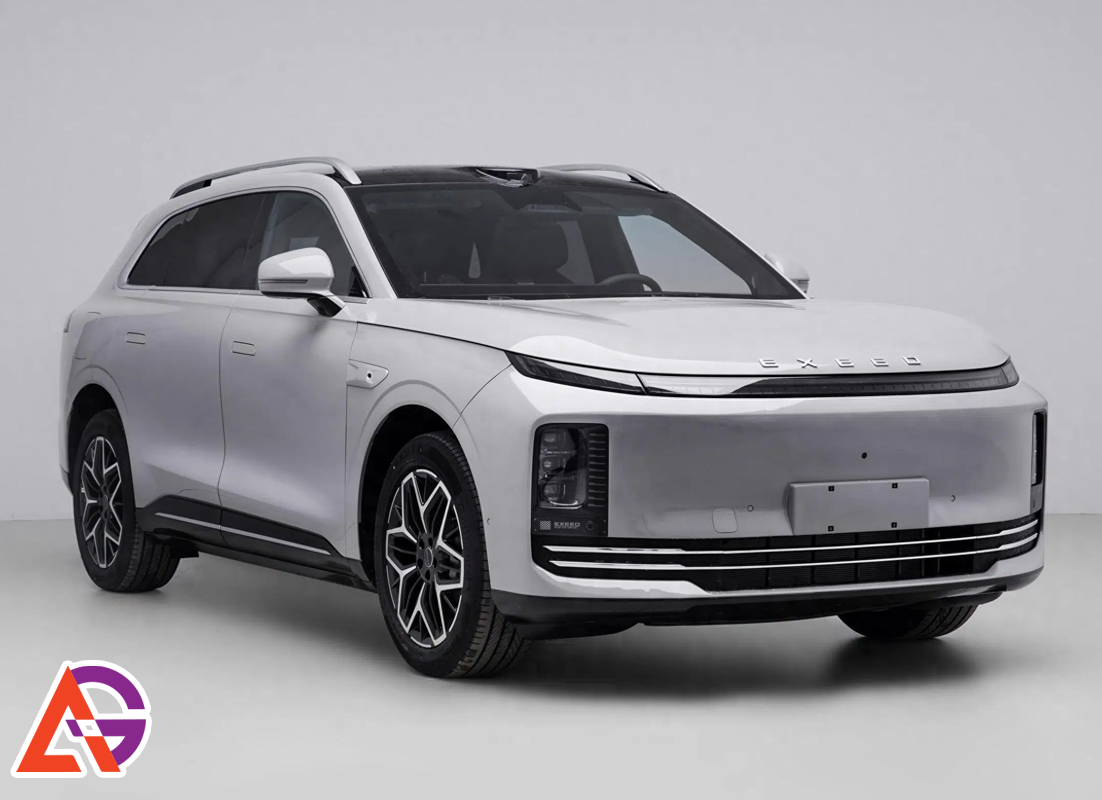
The automotive landscape in 2026 is no longer about who can build the loudest engine, but who can build the smartest machine. With the official unveiling of the Exeed EX7, Chery’s high-end luxury division has sent a clear message to the industry: they aren't just participating in the EV race they are trying to rewrite the rulebook. Positioned as a mid-to-large premium SUV, the EX7 is a masterclass in what happens when "aviation-grade" engineering meets consumer electronics. From a world-first braking system to a range that effectively kills "range anxiety" for good, here is a deep dive into why the Exeed EX7 is currently the talk of the 2026 Beijing Auto Show.
First Impressions: The Design Language
Walk up to the Exeed EX7, and the first thing you notice is the stance. It is wide. Purposeful. There is a certain solidness to the way the metal meets the road.The front end is dominated by what Exeed calls their "Star-Ribbon" lighting. A continuous LED light bar stretches across the nose, dipping slightly at the edges. It’s a look we have seen before, sure, but the execution here is cleaner than expected. The headlights are tucked low into sculpted air intakes, giving the EX7 a slightly aggressive, almost predatory look.
From the side, the EX7 is surprisingly simple. No weird creases. No fake vents. Just a smooth, flush surface broken only by pop-out door handles and a subtle shoulder line that rises toward the rear. The roofline slopes back gently not quite a coupe-SUV, but sportier than a traditional box. And the wheels. You have to look at the wheels. They are massive, aerodynamic, and finished in a two-tone diamond cut that catches the light nicely.
At the back, the theme continues with a full-width taillight. It’s glossy, blacked-out, and houses hundreds of tiny LED pins. When you unlock the car, it does a little light show. Cheesy? Maybe a little. But owners will love it. The overall design language is restrained. And that is actually a compliment. Too many Chinese EVs look like they are trying to land on Mars. The EX7 looks like it was designed in Munich. That is a very good thing.
Battery and Powertrain Options
Chery is not playing a one-size-fits-all game here. The EX7 will launch with two main battery chemistries: LFP (lithium iron phosphate) for the standard range models, and NMC (nickel manganese cobalt) for the long-range and performance variants.
Why does that matter? LFP is cheaper, safer, and lasts longer. NMC gives you more energy density and better cold-weather performance. By offering both, Exeed can price the base model aggressively while keeping the premium trims competitive.
Powertrain options are rumored to include:
-
Standard RWD: A single motor on the rear axle. Around 270 horsepower. Perfect for city driving and commuting.
-
Long Range RWD: A larger battery, similar power, but significantly more range.
-
Performance AWD: Dual motors. One on each axle. Total output pushing 400+ horsepower. 0 to 60 mph in under 4.5 seconds. Suddenly, this "Chery" is keeping up with a Tesla Model Y Performance at the traffic lights.
All versions get a heat pump as standard. That is not a small detail. It means winter range loss is mitigated better than EVs that rely on resistive heating.
The Interior: Where the Magic Actually Happens
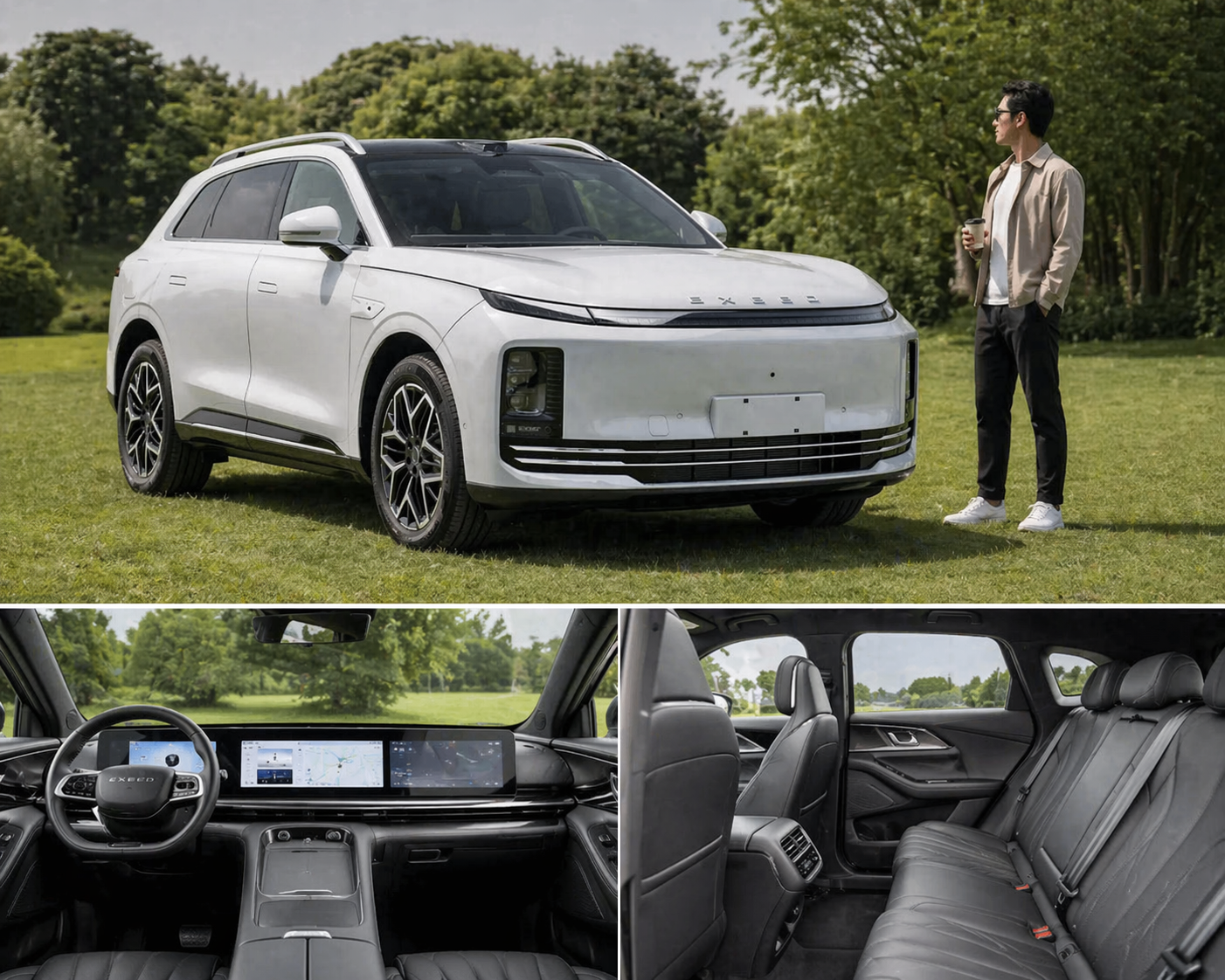
Look, exterior design is subjective. Charging speeds are just numbers. But the interior of the Exeed EX7? That is where this car genuinely surprised me. Open the door, and the first thing that hits you is the smell. Not joking. Exeed has clearly invested in high-grade, low-VOC materials. It smells like a Volvo. That is high praise. Seats are wrapped in a mix of Nappa leather and soft Alcantara-like microfiber. They are ventilated, heated, and have a massage function that actually moves your spine rather than just vibrating annoyingly.
The dashboard is a floating design. Minimalist, but not sterile. There is a massive 15.6-inch central touchscreen that runs on a Snapdragon 8295 chip. That processor is overkill for a car right now. But it also means the interface will stay snappy for half a decade. No lag. No stutter. Just instant response when you pinch, zoom, or swipe. Behind the steering wheel, a smaller 12.3-inch display handles your speed, navigation, and driver assistance graphics. And if you look up, you will see a large augmented reality heads-up display. It projects arrows directly onto the road ahead. It feels slightly futuristic, in a good way.
The rear seats are heated as well. There are manual sunblinds on the rear windows. And the panoramic glass roof tilts open it is not just a fixed glass panel. That is rare these days. Storage is clever. A deep center console. A hidden compartment under the armrest. And a frunk under the hood? Yes. The EX7 has a front trunk. It is not massive, but it will fit a charging cable and a small backpack.
Charging and Efficiency
Beyond the headline-grabbing 800V claim, there are real-world details that matter. The EX7 supports plug-and-charge technology. You pull up to a compatible DC fast charger, plug in, and the car handles authentication and payment automatically. No apps. No RFID cards. Just plug and walk away. That is the kind of frictionless experience that converts EV skeptics.
On AC charging, the onboard charger is rated at 11 kW as standard. Some markets might get a 22 kW option. For home charging, 11 kW is perfectly fine. It will top up the battery from empty to full overnight while you sleep. Vehicle-to-load (V2L) is included. You can plug a coffee maker, a laptop, or even another EV (slowly) into the EX7’s charging port. Camping just got a lot more civilized.
Efficiency figures are not final, but early data suggests around 3.5 miles per kWh (approximately 18 kWh/100 km) in mixed driving. That is respectable for a vehicle this size. Not class-leading, but competitive with a Tesla Model Y.
Pricing and Availability
Here is where things get interesting.
In China, the Exeed EX7 is expected to start around 250,000 to 320,000 RMB (roughly $34,000 to $44,000 USD). That undercuts the Model Y in China by a decent margin.
For Europe, pricing has not been finalized. But analysts expect the EX7 to land in the €48,000 to €58,000 range. That puts it directly against the Volkswagen ID.4, Skoda Enyaq, and Ford Explorer EV. Against those mainstream options, the EX7 looks like a bargain given its 800V tech and interior quality.
Availability? Late 2025 for China. Early to mid 2026 for Europe. No official word on North America yet. Do not hold your breath—Chery has no US distribution network, and tariffs on Chinese EVs remain high.

