How to Avoid Parking Fines in Kathmandu: Practical Tips for Drivers
Introduction: Parking in Kathmandu Is No Longer a Small Issue
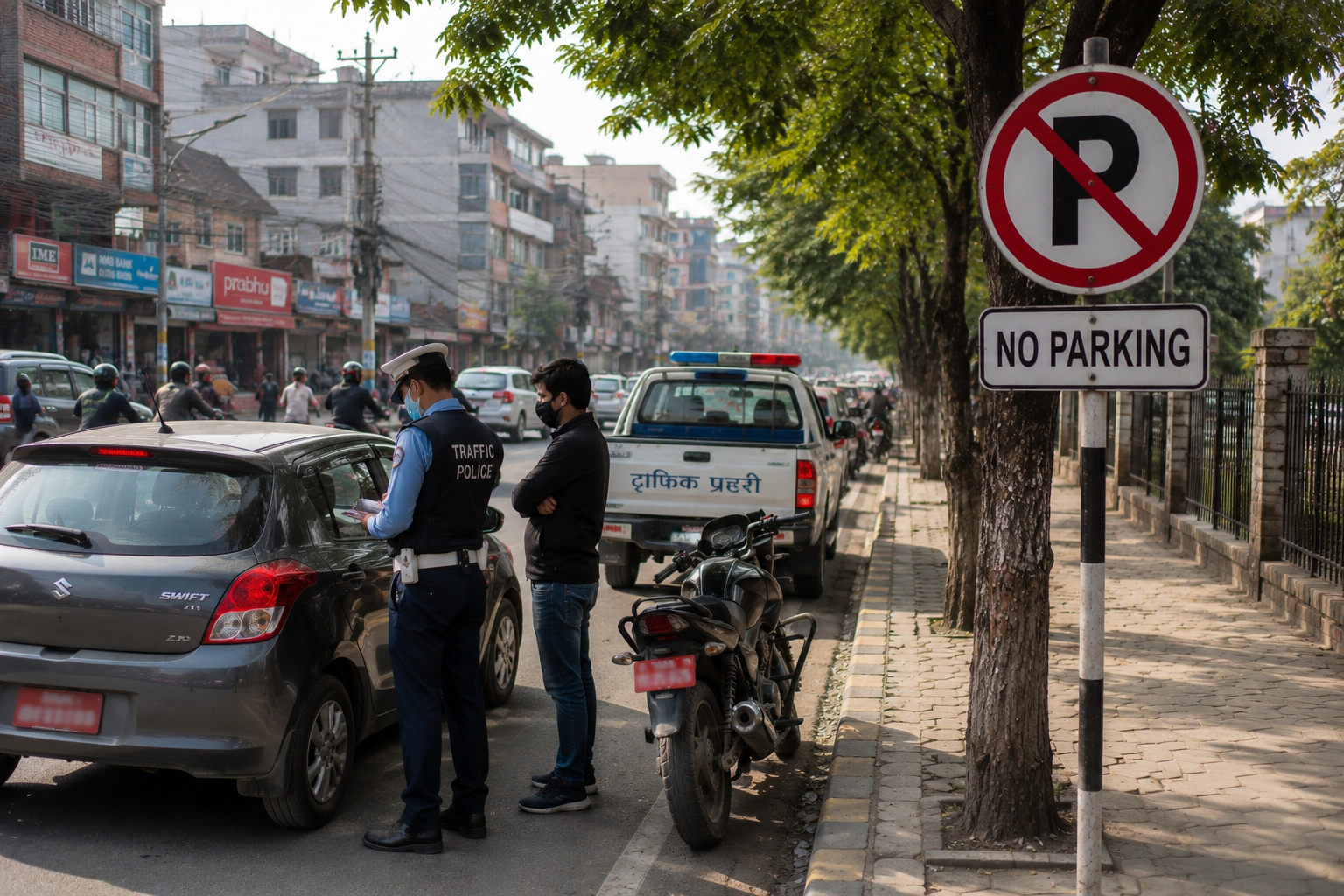
Parking in Kathmandu has become one of the most common problems for daily drivers, bike riders, office workers, shoppers, and delivery riders. The city is busy, the roads are narrow, and the number of vehicles keeps increasing every year. Because of this, traffic police and Kathmandu Metropolitan City have become stricter about illegal parking, roadside obstruction, and vehicles parked in no-parking zones.
For many drivers, a parking fine feels sudden. You park for “just five minutes,” come back, and your vehicle is either clamped, ticketed, or moved. But in Kathmandu, even a few minutes of wrong parking can create traffic jams, block pedestrians, disturb emergency vehicles, or make already narrow roads more chaotic.
Kathmandu Metropolitan City has been taking steps to manage parking, especially in busy areas like New Road, where roadside parking restrictions have been introduced and alternative parking facilities have been discussed. Reports have also mentioned free parking options at Kathmandu Tower as an alternative after parking bans in parts of New Road.
So, if you drive a car or ride a bike in Kathmandu, parking carefully is not just about avoiding a fine. It is about being responsible on the road. This guide explains practical ways to avoid parking fines in Kathmandu while keeping your vehicle safe and helping traffic move smoothly.
Why Parking Fines Are Common in Kathmandu
Parking fines are common in Kathmandu because the city was not originally designed for today’s level of traffic. Areas like New Road, Ason, Putalisadak, Bagbazar, Baneshwor, Thamel, Tripureshwor, Kalimati, and Koteshwor see heavy vehicle movement throughout the day. In these places, one badly parked vehicle can block an entire lane.
Traffic police usually take action when a vehicle is parked in a way that affects road movement, blocks pedestrians, or violates posted signs. Kathmandu’s parking problem has been discussed for years. A Kathmandu Post report from 2017 noted that the metropolis had identified several parking zones, but riders still struggled to find proper parking spaces. The same report also mentioned that vehicles parked on roadsides, blocking traffic or pedestrians, could be impounded.
This is why drivers should not assume that parking on the side of the road is always safe. In Kathmandu, if there is no clear parking sign, you should be extra careful.
Understand No-Parking Zones First
The easiest way to avoid parking fines in Kathmandu is to understand no-parking zones. A no-parking zone is any area where vehicles are not allowed to stop and remain parked. These areas are usually marked with signboards, traffic cones, road markings, or sometimes by municipal and traffic police instructions.
Common no-parking areas include:
Roads with No Parking signboards
Main roads with heavy traffic flow
Footpaths and pedestrian areas
Bus stops and taxi stands
Hospital entrances
School gates
Government office areas
Narrow roads where parked vehicles block movement
Turning points, junctions, and intersections
Areas near traffic lights
Private gates and building entrances
In Kathmandu, some roads may not have clear signs, but parking can still be risky if your vehicle blocks the road. So the best rule is simple: if your parked vehicle makes it difficult for others to pass, do not park there.
Do Not Park Just Because Others Are Parked There
This is one of the biggest mistakes drivers make in Kathmandu. You see other bikes or cars parked in a row, so you assume it is allowed. But that is not always true.
Sometimes those vehicles may already be parked illegally. Sometimes traffic police may arrive later and fine all of them. Sometimes the area may have been allowed earlier but later turned into a no-parking zone. Parking rules in busy places can change depending on traffic management needs, road repairs, festivals, rallies, VIP movement, or municipal decisions.
So never use “aru le pani park gareko cha” as your main logic. Look for signs, ask nearby shopkeepers, or check if there is an official parking area nearby.
Always Look for Official Parking Areas
The safest way to avoid parking fines is to use official parking areas. In Kathmandu, official parking may be available in malls, business complexes, hospitals, hotels, private parking lots, and designated municipal parking zones.
For example, if you are going to New Road, do not immediately park on the roadside. Search for available parking in nearby buildings or designated spaces. KMC has also discussed alternative parking arrangements around New Road after roadside parking restrictions, including parking capacity at Kathmandu Tower.
Yes, paid parking may feel expensive sometimes. But paying a small parking fee is better than paying a fine, wasting time, or dealing with a clamped or towed vehicle.
Avoid Parking on Footpaths
Parking on footpaths is common in Kathmandu, especially for bikes and scooters. But it is a bad habit. Footpaths are made for pedestrians, not vehicles. When bikes block the footpath, people are forced to walk on the road, which increases the risk of accidents.
Traffic police and municipal police can take action against vehicles parked on footpaths, especially in busy commercial areas. Even if there is space, do not park there unless it is clearly marked as a parking area.
A responsible driver should always think: “Can a pedestrian walk easily after I park here?” If the answer is no, find another place.
Do Not Park Near Junctions and Corners
Many drivers park near road corners because they think it is convenient. But this is one of the most dangerous parking habits. When you park near a corner, other drivers cannot see clearly while turning. It also creates traffic confusion and increases the chance of minor accidents.
In busy areas like Baneshwor, Putalisadak, Tripureshwor, Kalanki, and Koteshwor, junction parking can quickly create long traffic jams. Even if you are stopping for a short time, avoid parking near corners, roundabouts, zebra crossings, and traffic light areas.
A good rule is to leave enough space from junctions and turning points. If your vehicle affects visibility, it should not be parked there.
Respect Bus Stops and Taxi Stands
Bus stops and taxi stands are not private waiting zones. Many drivers park there for quick shopping or waiting for someone. But this creates problems for public transport, passengers, and traffic flow.
When buses cannot stop properly at a bus stop, they stop in the middle of the road. This blocks the lane and creates unnecessary congestion. The same happens when private vehicles occupy taxi stands.
If you park at a bus stop or taxi stand, your chances of getting fined are higher. More importantly, you are making the road worse for everyone.
Be Extra Careful in New Road and Core City Areas
New Road, Ason, Indrachowk, Bhotahity, Mahabouddha, and nearby core city areas are some of the most sensitive parking zones in Kathmandu. These places have narrow roads, heavy pedestrian movement, shops, loading activities, and high traffic pressure.
Kathmandu Metropolitan City has taken stricter steps in the New Road area, including banning parking in certain roadside areas and introducing alternative arrangements. This shows that the city is trying to reduce road obstruction in the busiest commercial zones.
If you are visiting New Road, do not go there expecting easy roadside parking. Plan your parking before you reach. This small habit can save you money, time, and stress.
Watch for Temporary Traffic Rules
Kathmandu traffic rules can change temporarily during festivals, rallies, road construction, VIP movement, public events, or special traffic management days. A road that allowed parking yesterday may not allow parking today.
During big festivals like Dashain, Tihar, Indra Jatra, or major public events, traffic police may restrict parking in certain areas. The same can happen near temples, stadiums, government offices, or event venues.
Before parking, check the situation around you. If there are traffic cones, police presence, temporary signs, or barriers, do not ignore them.
Do Not Leave Your Vehicle in a Risky Place for Long
Some drivers park illegally and think, “Ma 2 minute ma aauchhu.” But Kathmandu traffic enforcement does not work according to your timing. If the vehicle is blocking traffic, action can happen quickly.
Leaving your vehicle unattended in a risky area is a big mistake. If you must stop briefly, make sure it is not blocking the road, gate, footpath, bus stop, or traffic flow. Better yet, find a proper parking space even for short work.
Most parking fines happen because drivers underestimate how quickly enforcement can happen.
Ask Before Parking, But Ask the Right Person
In Kathmandu, many people ask nearby shopkeepers or security guards, “Yaha parking milcha?” This can help, but you should still be careful. A shopkeeper may say yes because they want customers, but that does not always mean parking is legal.
The better approach is to ask:
Is this official parking?
Will traffic police fine here?
Is there a parking ticket system?
Is this private property parking?
How long can I park here?
If you see traffic police or municipal police nearby, ask them directly. It is better to ask once than to pay later.
Keep Some Change or Digital Payment Ready
Sometimes drivers avoid proper parking because they do not want to deal with payment or they do not have cash. This is a weak excuse, but it happens.
Keep some change ready for parking fees. Also, many parking operators now accept digital payments. If you are going to busy places, assume you may need to pay for parking.
A small parking fee is part of responsible vehicle ownership in Kathmandu.
For Bike Riders: Do Not Squeeze Anywhere
Bike and scooter riders often think they can park anywhere because two-wheelers take less space. But this is exactly why illegal bike parking is common in Kathmandu.
Do not squeeze your bike between poles, shop entrances, footpaths, zebra crossings, or building gates. It may look harmless, but it can block pedestrians, disturb businesses, or create safety risks.
If you ride a bike, park in a proper two-wheeler parking area. Lock your handle, but also make sure your bike is not disturbing others. A badly parked bike can be removed, fined, or damaged by others trying to pass.
For Car Drivers: Do Not Block Half the Road
Car drivers need to be even more careful because cars take more space. In Kathmandu’s narrow roads, parking one car on the roadside can block an entire lane.
Avoid parking in these situations:
If another car cannot pass easily
If your car blocks a gate
If your side mirror sticks into traffic
If your vehicle forces bikes into the opposite lane
If the road is already narrow
If you are near a turn or junction
Even if no sign says “No Parking,” your vehicle can still be a problem if it obstructs traffic.
Use Malls and Private Parking When Possible
One practical habit is to park at malls, supermarkets, hotels, or private parking areas when visiting busy locations. This is safer and more comfortable, especially if you are going to spend more than 15 minutes.
For example, if you are going to a restaurant, bank, office, or shopping area, check if the building has basement parking. If not, search nearby paid parking before you reach.
This habit is especially useful in places like:
New Road
Thamel
Durbarmarg
Putalisadak
Baneshwor
Maitighar
Tripureshwor
Kalimati
Lalitpur core areas
Boudha and Chabahil
Drivers who plan parking in advance face fewer problems.
Do Not Park in Front of Gates
Parking in front of someone’s house, office, shutter, or apartment gate is disrespectful and risky. Even if there is no no-parking board, blocking an entrance can create conflict.
The owner may call traffic police or municipal police. Your vehicle may be clamped or removed. In some cases, people may also damage your vehicle out of frustration.
A simple rule: never block access. If someone cannot enter or exit because of your vehicle, you are parked wrongly.
Keep Your Phone Number Visible
This does not make illegal parking legal, but it can help in some situations. Many drivers keep a small card with their phone number on the dashboard. If your vehicle is accidentally causing inconvenience, someone may call you before taking further action.
However, do not misuse this habit. A phone number is not a license to park anywhere. It is only a backup for genuine situations.
Write your number clearly and place it where it is visible from outside.
Understand That “Hazard Light On” Does Not Mean Parking Is Allowed
Many drivers turn on hazard lights and park in the middle of the road, thinking it becomes acceptable. It does not.
Hazard lights are for emergencies, breakdowns, or warning other road users. They are not for buying momo, picking up someone, or waiting outside a shop.
If you stop in a no-parking zone with hazard lights on, you can still be fined. Use hazard lights responsibly.
Avoid Double Parking
Double parking means parking beside another parked vehicle, blocking the moving lane. This is common near schools, banks, restaurants, and busy shops. It is also one of the fastest ways to create a traffic jam.
Even if you are waiting inside the car, double parking is still a problem. Other drivers have to slow down, switch lanes, or honk continuously. Traffic police usually do not tolerate this in busy areas.
If there is no proper space, keep moving until you find one.
Be Careful Around Schools and Hospitals
Schools and hospitals are sensitive areas. Parking wrongly near these places can create safety problems for children, patients, ambulances, and pedestrians.
Near schools, do not park in front of gates during opening and closing times. Near hospitals, never block ambulance movement. These areas may have stricter monitoring, especially during peak hours.
Responsible parking is not only about avoiding fines. It is about basic public discipline.
Check Road Signs Properly
Many drivers miss signs because they are in a hurry. Before parking, take five seconds and look around. Check poles, walls, signboards, road markings, and nearby traffic instructions.
Important signs to notice include:
No Parking
No Stopping
Tow Away Zone
One Way
Bus Stop
Taxi Stand
Loading/Unloading Only
Private Parking
Reserved Parking
If the sign is unclear, choose another place. In Kathmandu, guessing can become expensive.
Do Not Argue After Making a Clear Mistake
If traffic police or municipal police take action because you parked in a no-parking zone, arguing usually does not help. It can make the situation worse.
If you genuinely believe there was confusion, speak politely and explain. But if you clearly parked wrongly, accept it and learn from it. The better solution is to avoid repeating the same mistake.
A mature driver does not fight over every fine. A mature driver improves their habit.
Use Navigation and Local Search
Before going to a busy place, search for parking nearby. You can use Google Maps or ask the business you are visiting if they have parking. Many restaurants, hotels, clinics, banks, and offices can guide you to nearby parking.
Search phrases like:
“Parking near New Road”
“Parking near Thamel”
“Parking near Baneshwor”
“Basement parking Kathmandu”
“Bike parking near me”
It takes less than a minute but can save you from a fine.
Avoid Peak-Hour Parking Trouble
Kathmandu’s peak traffic hours are usually morning office time and evening return time. During these hours, traffic police are more active in managing road flow. Parking illegally during peak hours is more likely to create problems.
Try to avoid roadside stops during:
Morning office rush
School opening time
Lunch-hour commercial movement
Evening office rush
Festival shopping periods
Weekend market rush
If you must visit busy areas, go earlier or later when parking is easier.
What to Do If Your Vehicle Is Clamped or Towed
If your vehicle is clamped or towed, do not panic. First, check nearby notices or ask traffic police where to go. You may need to contact the traffic police office or municipal authority, pay the required fine, and show vehicle documents.
Keep these documents ready:
Driving license
Bluebook
Insurance document if required
Citizenship or ID if needed
Fine/ticket slip if issued
The process may take time, so prevention is always better.
Practical Parking Checklist for Kathmandu Drivers
Before leaving your vehicle, ask yourself:
Is this a legal parking area?
Is there any no-parking sign?
Am I blocking traffic?
Am I blocking pedestrians?
Am I near a junction or corner?
Am I blocking a gate?
Can emergency vehicles pass?
Is this a bus stop or taxi stand?
Will my vehicle disturb others?
Is there a safer paid parking nearby?
If any answer feels doubtful, do not park there.
Parking Etiquette Every Driver Should Follow
Kathmandu does not only need stricter rules. It also needs better driving culture. Parking etiquette matters because every vehicle owner shares the same limited road space.
Good parking etiquette means:
Park within marked lines
Do not occupy two spaces
Do not block another vehicle
Do not park too close to another car
Fold side mirrors when needed
Leave space for bikes and pedestrians
Do not park in disabled parking spaces
Do not throw garbage from your vehicle
Do not use loud horns while waiting
Move quickly if your vehicle is causing obstruction
These habits may sound small, but they make a big difference in a crowded city.
Why Avoiding Parking Fines Is Also Good for Your Vehicle
Illegal parking does not only cost money. It can also damage your vehicle. If your car or bike is parked in a risky place, it may get scratched, hit, clamped, or towed. Bikes parked in crowded footpaths can fall. Cars parked on narrow roads can lose mirrors or get dents.
Proper parking keeps your vehicle safer. It also gives you peace of mind. You can finish your work without constantly worrying whether traffic police are taking action outside.
Final Thoughts: Smart Parking Is Smart Driving
Avoiding parking fines in Kathmandu is not difficult if you build the right habits. The problem starts when drivers park carelessly and assume nothing will happen. In today’s Kathmandu, that mindset is risky.
The best approach is simple: look for signs, avoid no-parking zones, use official parking spaces, do not block roads or footpaths, and plan your parking before reaching busy areas. Whether you drive a car or ride a bike, your parking habit shows your discipline as a road user.
Kathmandu already has enough traffic pressure. One wrongly parked vehicle can make things worse for everyone. So, park responsibly, respect the rules, and save yourself from unnecessary fines.
Safe parking is not just about avoiding penalties. It is about respecting the road, the city, and the people around you.

