New EV Tax Policy in Nepal: What It Really Means for Buyers and the Future of Electric Vehicles
Nepal’s electric vehicle (EV) market has been growing steadily over the past few years. With rising fuel prices, increasing environmental awareness, and government incentives, EVs quickly became an attractive option for many buyers. For a while, it even felt like Nepal was moving confidently toward a cleaner, more sustainable transport system.
But the recent changes in the EV tax structure have stirred up confusion, debate, and in many cases, overreaction. Headlines are everywhere claiming that EVs are now “too expensive” or that the government has “killed the EV market.” The truth, however, is more nuanced.
This article breaks down what the new EV tax policy actually means, who it affects, and what it could mean for the future of electric mobility in Nepal.
Why EVs Matter for Nepal
Before diving into the tax changes, it’s important to understand why EVs are such a big deal in Nepal.
Nepal imports nearly all of its fuel. This creates a constant outflow of money and makes the economy vulnerable to global price fluctuations. On top of that, urban air pollution is becoming a serious concern, especially in cities like Kathmandu.
Electric vehicles offer a practical solution:
- They reduce fuel imports
- They lower long-term running costs
- They help cut down air pollution
- They support the use of Nepal’s hydropower resources
Because of these benefits, the government had previously introduced lower taxes on EVs to encourage adoption.
What Has Changed in the New EV Tax Policy?
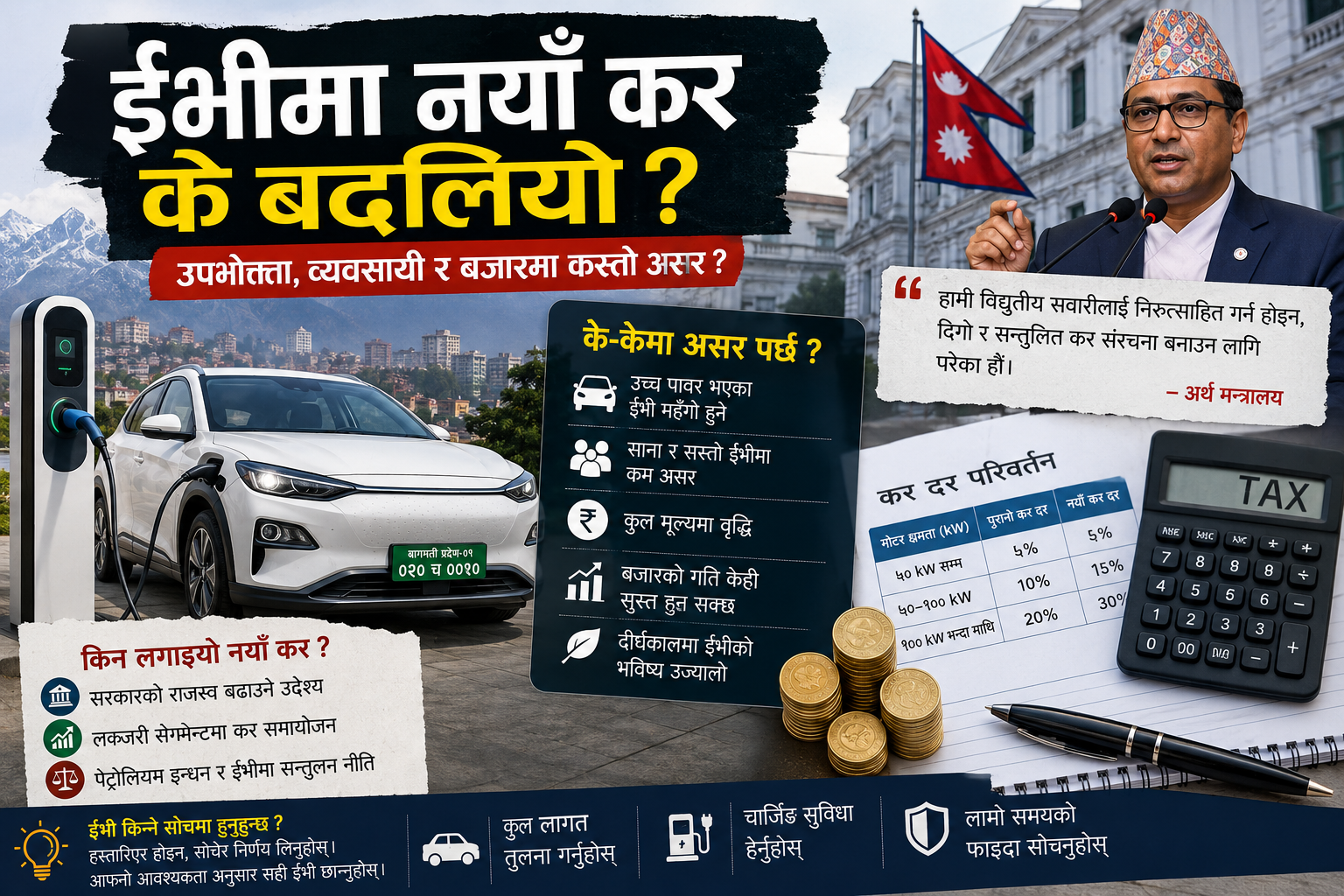
The latest tax revision mainly targets EVs based on their motor capacity, measured in kilowatts (kW).
Here’s the key shift:
- Higher-powered EVs now face increased taxes
- Mid-range vehicles are also affected to some extent
- Lower-powered, budget EVs remain mostly unchanged
So this is not a blanket tax increase across all electric vehicles. It’s more of a tiered adjustment, where premium and high-performance EVs are taxed more heavily.
Will EV Prices Increase?
Short answer: Yes, but only for certain segments.
Vehicles likely to become more expensive:
- EVs above 100kW
- Premium SUVs and luxury models
- High-performance electric vehicles
Vehicles less affected:
- Entry-level EVs
- Smaller city-focused electric cars
- Budget-friendly models
This means that for many first-time EV buyers, especially those looking for affordable options, the impact may not be as significant as it’s being portrayed.
Impact on Consumers
For buyers, the changes introduce a layer of uncertainty.
1. More careful decision-making
Buyers are now more likely to compare EVs with petrol or hybrid options before making a purchase.
2. Shift toward budget EVs
With higher taxes on premium models, more consumers may lean toward smaller, practical EVs.
3. Delayed purchases
Some buyers may wait to see how the market stabilizes before committing.
How Businesses Are Reacting
EV dealers and importers are directly affected by these changes.
- Pricing strategies need to be revised
- Existing stock may become harder to sell at old expectations
- Customer education becomes more important than ever
That said, most businesses understand that EV demand is not disappearing. It may slow down temporarily, but the long-term trend still favors electric mobility.
Why Did the Government Increase EV Taxes?
While the government has not framed it negatively, there are a few logical reasons behind the decision.
1. Revenue generation
Lower EV taxes meant reduced government income. Adjustments help balance this.
2. Targeting luxury imports
High-end EVs are often seen as luxury goods, and taxing them more aligns with broader import policies.
3. Market balancing
The government may be trying to create a balance between EVs and fuel-based vehicles in terms of taxation.
Is This a Step Back for EV Adoption?
This is where opinions differ.
On one hand:
- It could slow down the adoption of premium EVs
- It may discourage some buyers
- It creates uncertainty in the market
On the other hand:
- Budget EV adoption can still grow
- The long-term benefits of EVs remain unchanged
- Infrastructure and awareness are still improving
So, this is not necessarily a setback, but it does change the pace of growth.
The Role of Media and Public Perception
A big part of the current confusion comes from how the issue has been presented.
Many headlines have focused only on the negative side, often without explaining the full picture. Social media has amplified this, leading to assumptions that EVs are no longer viable in Nepal.
In reality, the situation is more balanced.
Not all EVs are affected equally, and the market is still very much alive.
What Happens Next in Nepal’s EV Market?
Looking ahead, a few trends are likely:
1. Growth in affordable EV segment
Lower-powered EVs will likely dominate the market.
2. Slower premium EV sales
High-end models may see reduced demand.
3. Increased interest in hybrids
Some buyers may consider hybrid vehicles as a middle ground.
4. More focus on infrastructure
Charging stations and service networks will play a bigger role.
Advice for EV Buyers in Nepal
If you’re planning to buy an EV, here’s a practical approach:
- Don’t rush your decision
- Compare total ownership cost, not just purchase price
- Choose based on your daily usage needs
- Stay updated with official pricing and policies
EVs still make sense for many users, especially in urban settings.
Final Thoughts
The new EV tax policy in Nepal has definitely created noise, but it hasn’t “killed” the EV market as some claims suggest.
What it has done is reshape the market.
Premium EVs may slow down, but affordable electric vehicles still have strong potential. Nepal’s long-term direction toward cleaner energy and reduced fuel dependency remains unchanged.
In the end, this is less about the end of EV growth and more about how that growth evolves from here.

