The Future of Automobile Industry in Nepal: Trends, Technology & Opportunities
The Future of Automobile Industry in Nepal: Trends, Technology & Opportunities
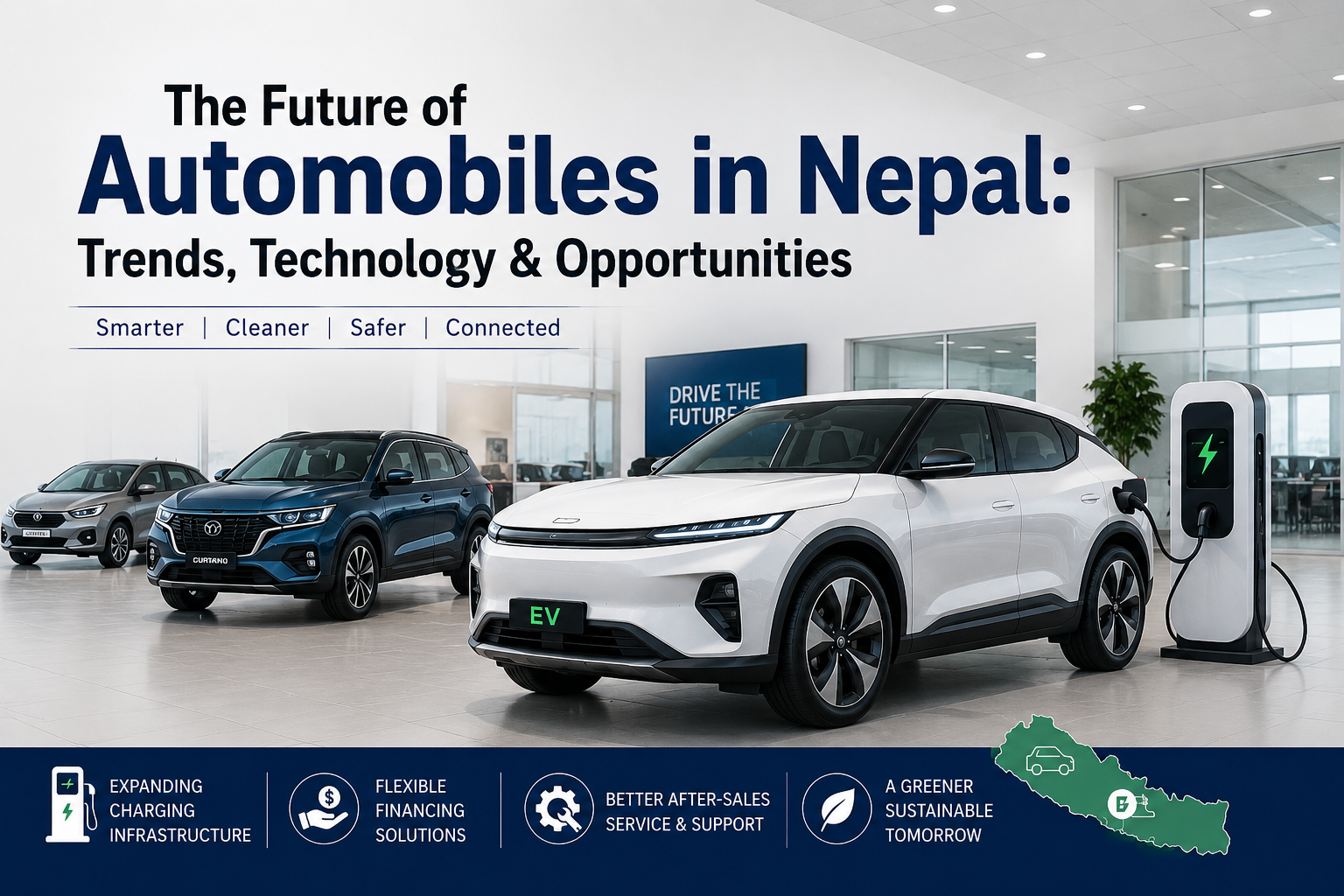
Nepal’s automobile industry is entering an important period of transformation. Changing consumer preferences, urbanization, increasing demand for fuel-efficient vehicles, advancements in automotive technology, and the growing popularity of electric vehicles (EVs) are reshaping the country’s mobility landscape.
For decades, petrol and diesel vehicles have dominated Nepal’s roads. However, the market is gradually becoming more diverse, with electric, hybrid, and conventional vehicles offering consumers more choices. At the same time, modern automobiles are becoming safer, more connected, more efficient, and increasingly dependent on digital technology.
As Nepal continues to develop its transportation infrastructure and adopt new technologies, the future of the automobile industry is likely to be shaped by electric mobility, smarter vehicles, improved customer services, flexible financing, and changing consumer expectations.
The Growing Automobile Market in Nepal
Automobiles have become an important part of everyday life in Nepal. Cars and SUVs are no longer considered only luxury products; for many families, professionals, and businesses, they provide essential transportation, convenience, and mobility.
Urban expansion, changing lifestyles, improving road connectivity, and the availability of vehicle financing have contributed to continued interest in personal vehicles. At the same time, consumers are becoming more informed and selective when purchasing automobiles.
Today's buyers often consider much more than the purchase price. Fuel efficiency, safety, maintenance costs, resale value, comfort, technology, warranty, financing options, and after-sales service can all influence a buying decision.
SUVs and compact crossovers have also gained popularity because they offer a combination of space, comfort, ground clearance, practicality, and road presence that can be useful for Nepal's varied driving conditions.
Electric Vehicles: A Major Part of Nepal's Automotive Future
One of the most significant developments in Nepal's automobile industry is the growing adoption of electric vehicles.
EVs are attracting consumers because of their potential for lower running costs, quiet operation, instant torque, and reduced reliance on conventional fossil fuels. Nepal's growing electricity infrastructure and hydropower potential also provide a favorable foundation for expanding electric mobility.
Modern electric vehicles are becoming increasingly capable, with improvements in battery technology, driving range, charging speeds, safety features, and overall performance. As consumers gain more experience with EV ownership, electric vehicles are expected to become an increasingly important part of Nepal's automotive market.
However, the transition to electric mobility also presents challenges. Charging infrastructure, charging time, battery replacement costs, long-distance travel, access to reliable charging facilities, and consumer awareness remain important considerations.
Expanding dependable charging infrastructure across major cities, highways, and popular travel destinations will be essential for supporting wider EV adoption.
Advancements in Automotive Technology
Technology is transforming automobiles far beyond their engines and transmissions. Modern vehicles are increasingly becoming digital, connected, and intelligent.
Features such as touchscreen infotainment systems, smartphone connectivity, digital instrument clusters, parking cameras, parking sensors, automatic climate control, connected services, and driver-assistance technologies are becoming increasingly common in newer vehicles.
Safety technology is also becoming an important consideration for car buyers. Features such as airbags, Anti-lock Braking Systems (ABS), electronic stability control, traction control, hill-start assist, parking assistance, and other driver-support technologies can improve convenience and safety.
As automotive technology continues to develop, consumers in Nepal are likely to place greater importance on both traditional vehicle performance and digital features when comparing different models.
The Rise of Smart and Connected Cars
The automobile of the future is expected to provide much more than basic transportation. Connected-car technology is creating new ways for vehicles, drivers, smartphones, and service providers to interact.
Modern connected vehicles can offer features such as vehicle-health monitoring, maintenance alerts, navigation services, vehicle location, remote information access, and selected vehicle controls through mobile applications.
As internet connectivity and digital services become more accessible in Nepal, connected features could become an increasingly important part of the automotive buying experience.
For automobile companies and dealerships, this also creates opportunities to provide more personalized services, digital maintenance reminders, online support, and technology-driven customer experiences.
Changing Consumer Preferences in Nepal
Nepali car buyers are becoming increasingly focused on overall value rather than simply looking for the lowest purchase price.
Fuel economy, maintenance expenses, resale value, safety, comfort, technology, warranty, service availability, and long-term ownership costs are all becoming important factors in vehicle selection.
Consumers are also increasingly interested in transparency. Buyers want accurate information about a vehicle's condition, service history, mileage, ownership, accident history, features, and pricing before making a purchase.
The growth of digital platforms and social media has further changed the way people research automobiles. YouTube, Facebook, TikTok, Instagram, and automotive websites allow potential buyers to watch vehicle reviews, compare models, explore features, understand market prices, and shortlist vehicles before visiting a showroom.
This shift means automobile businesses must provide not only quality vehicles but also reliable information and a strong digital customer experience.
Opportunities in the Used and Reconditioned Car Market
The used and reconditioned automobile market will continue to play an important role in Nepal.
New vehicles can be financially challenging for some buyers, making professionally inspected pre-owned vehicles an attractive alternative. A quality used vehicle can provide buyers with access to higher vehicle segments, better features, and established models at a comparatively lower purchase price.
However, trust and transparency are particularly important in the second-hand vehicle market.
Buyers increasingly want to know about:
- Vehicle service history
- Actual kilometers driven
- Accident and repair history
- Ownership history
- Mechanical condition
- Vehicle inspection reports
- Genuine features and specifications
- Maintenance requirements
Dealers that provide accurate vehicle information, proper inspections, transparent documentation, and dependable after-sales support can build stronger relationships with customers.
Digital platforms can further improve the used-car buying experience by allowing customers to compare vehicle prices, specifications, mileage, features, photographs, and condition before visiting a dealership.
Financing and Flexible Vehicle Ownership
Vehicle financing is another important part of Nepal's automobile market. Flexible financing options can make vehicle ownership more accessible to a wider range of consumers.
Banks, financial institutions, dealerships, and automotive businesses can contribute to this market by providing convenient financing solutions and simpler customer experiences.
The future may bring greater use of digital loan applications, online documentation, faster communication, and more flexible financing structures.
For customers, however, the monthly installment should not be the only consideration. Buyers should also evaluate interest costs, insurance, maintenance, fuel or charging expenses, taxes, and other ownership costs before purchasing a vehicle.
Sustainable Mobility and the Future of Transportation
The future of Nepal's automobile industry is closely connected with sustainable transportation.
Electric vehicles can help reduce dependence on imported fossil fuels and support cleaner mobility, particularly when powered by electricity from renewable sources. However, sustainable transportation involves more than simply replacing petrol and diesel vehicles with EVs.
Better public transportation, improved road infrastructure, efficient urban planning, charging networks, responsible vehicle use, and proper management of vehicle batteries and components will all contribute to a more sustainable mobility system.
Nepal's future transportation ecosystem will likely involve a combination of private vehicles, public transportation, electric mobility, and improved infrastructure.
Challenges Facing Nepal's Automobile Industry
Despite its opportunities, Nepal's automobile sector faces several challenges.
Import duties, taxation, government regulations, road infrastructure, financing costs, economic conditions, fuel prices, and changing consumer demand can all influence the automobile market.
For EVs, charging infrastructure, battery-related concerns, long-distance travel, and access to reliable charging facilities remain important considerations.
For petrol and diesel vehicles, fuel costs, maintenance expenses, environmental concerns, and changing regulations may influence future demand.
Automobile businesses will therefore need to remain adaptable. Companies and dealerships that understand market changes, invest in customer service, embrace technology, and provide transparent information will be better positioned to compete in the changing market.
New Opportunities for Automobile Businesses
The transformation of Nepal's automobile industry is creating opportunities beyond traditional vehicle sales.
Potential growth areas include:
- EV dealerships
- Charging infrastructure
- Battery-related services
- Vehicle software and connected services
- Automotive financing
- Digital automobile marketplaces
- Vehicle inspection services
- Maintenance and repair
- Vehicle detailing
- Insurance services
- Vehicle exchange programs
- After-sales support
Digital marketing is also becoming increasingly important. Customers now research vehicles online before making purchasing decisions, creating opportunities for automobile businesses to build trust through informative videos, vehicle reviews, walkaround tours, educational content, and transparent listings.
The automobile business of the future may therefore be less about simply selling a vehicle and more about providing a complete mobility experience.
What Will the Future Car Market in Nepal Look Like?
The future automobile market in Nepal is unlikely to be dominated by a single type of vehicle.
Instead, consumers are likely to have more choices based on their individual needs, budgets, lifestyles, and driving patterns.
Urban users may increasingly consider compact EVs because of their efficiency and potentially lower running costs. Families may continue to prefer SUVs and crossovers because of their space and comfort. Businesses may look for practical commercial vehicles, while some customers will continue to prefer petrol, diesel, or hybrid models based on their specific requirements.
The market is likely to become increasingly competitive, giving consumers more options.
Technology will also become an important differentiator. Buyers may increasingly compare vehicles based not only on engine size, exterior design, or price but also on battery range, charging capability, safety technology, connectivity, comfort features, software, and overall cost of ownership.
The Role of Automobile Dealers in the Future
As the market evolves, the role of automobile dealers is also changing.
Customers increasingly expect more than a showroom and a sales representative. They want transparent vehicle information, financing assistance, vehicle inspections, exchange opportunities, insurance support, servicing, and reliable after-sales care.
Dealerships that can provide a complete customer journey—from vehicle discovery and financing to purchase, maintenance, and resale—can create stronger long-term relationships with customers.
Trust will become one of the most valuable assets in Nepal's automobile industry.
Conclusion
The future of the automobile industry in Nepal is full of opportunities. The market is moving from a traditional vehicle-focused model toward a more diverse automotive ecosystem involving electric mobility, smart technology, connected services, digital platforms, flexible financing, and improved customer experiences.
Electric vehicles are likely to play an increasingly important role, but petrol, diesel, hybrid, and electric vehicles may continue to coexist as consumer needs and technology evolve.
At the same time, changing customer expectations will encourage automobile companies and dealerships to focus more on transparency, vehicle quality, technology, financing, and after-sales service.
For Nepal, the automobile industry represents more than vehicle sales. It has the potential to support technological development, new businesses, employment, infrastructure improvements, and more sustainable transportation.
The road ahead will bring both challenges and opportunities. Businesses that adapt to technological changes and changing consumer expectations—and consumers who make informed decisions based on total ownership value—will be better positioned to benefit from Nepal's next chapter of automotive growth.

