Third-Gen Hyundai Creta: New Platform, Bigger Size, and Everything Else Changing in 2026
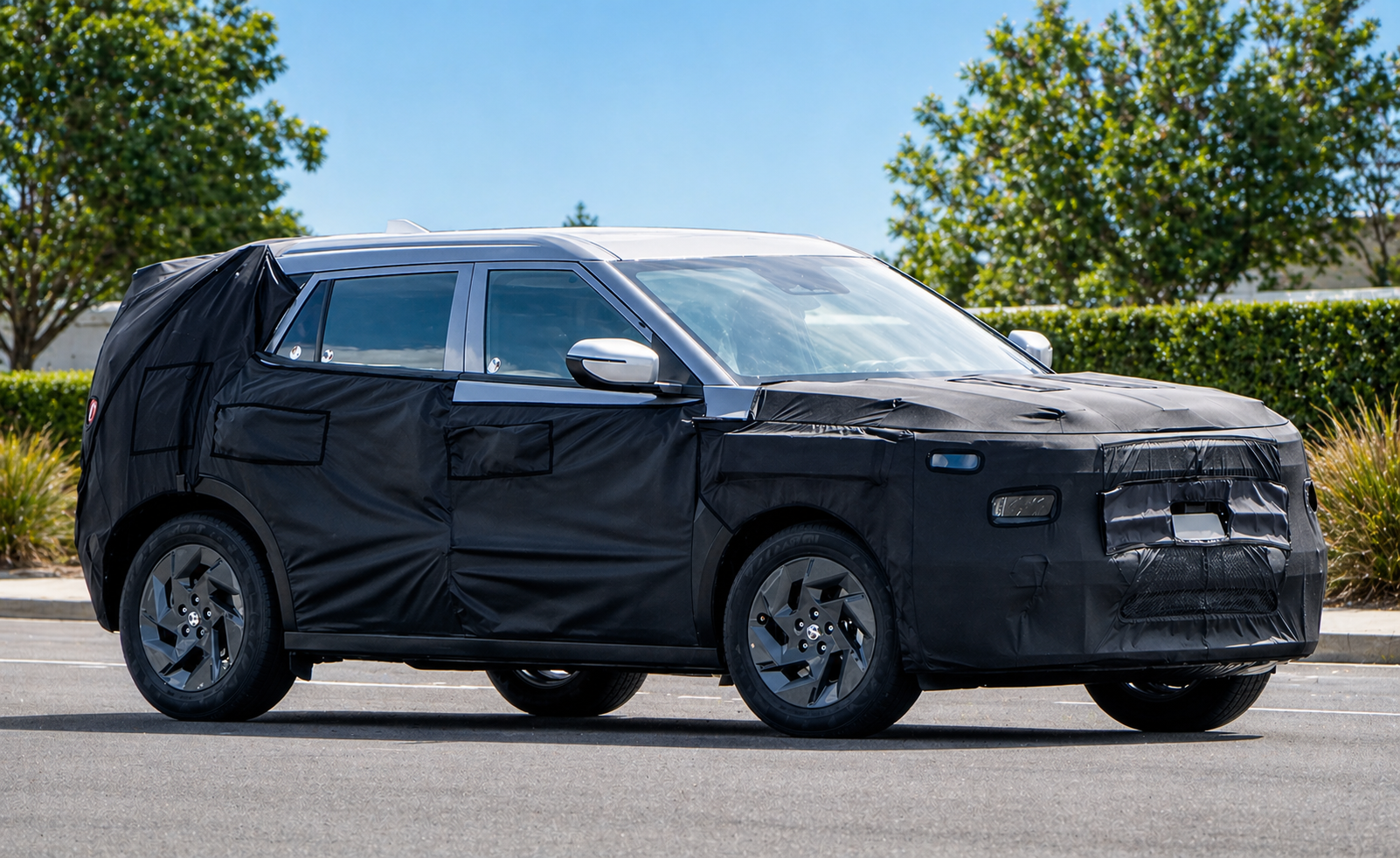
The Hyundai Creta needs no introduction. Since 2015, it’s been the default answer whenever someone in India or Nepal asks, “Which SUV should I buy under 30 lakhs?” It outsells rivals, holds resale value like a Toyota, and somehow manages to feel fresh even years after a launch.
But familiarity can breed complacency. The current second-gen Creta, launched in 2020 and facelifted in 2024, is starting to show its age against newer, more aggressive players like the Maruti Grand Vitara, Toyota Hyryder, Honda Elevate, and the incoming Tata Curvv. Hyundai knows it. Which is why the third-generation Creta isn’t just another mild update. It’s a ground-up rethink.
The two headlines you need to know: new platform and bigger size. Let’s break down what that actually means for buyers, and why this might be the most important Creta yet.
1. The Platform Swap
The current Creta rides on Hyundai’s K2 platform, which also underpins the Kia Seltos, Alcazar, and Carens. It’s good safe, refined, and cost-effective. But it’s a decade-old architecture at this point.
For the third-gen, Hyundai is moving the Creta to a modified version of the newer K3 platform. You’ll find this under the latest Hyundai Verna, global i30, and even the Tucson in some markets. In Hyundai speak, they might call it “K3-CS” for compact SUV.
Why should you care? Three reasons.
Safety first: The K3 platform was engineered from day one for stricter global crash norms, including GNCAP and Bharat NCAP. Expect higher usage of ultra-high-strength steel, better crash load paths, and standard 6 airbags. The current Creta already scores well, but the next one is aiming for a straight 5-star rating across the board.
Electrification ready: The K2 wasn’t designed with big batteries in mind. The K3 is. This opens the door for strong-hybrid and full-EV versions without major compromises in boot space or cabin packaging. Hyundai has already confirmed an EV strategy for India, and a Creta EV in 2027 is almost guaranteed. The new platform is step one.
Ride and handling: A stiffer platform usually means better dynamics. Don’t expect the Creta to suddenly out-handle a Skoda Kushaq, because Hyundai will still tune it for comfort first. But the extra rigidity should cut down on body roll, improve high-speed stability, and make the cabin quieter. On Nepal’s broken highways and rough patches, that’s a real-world win.
2. Bigger Footprint
Ask any Creta owner what they’d change, and you’ll hear the same thing: “It’s great, but rear seat space could be better for three adults” and “boot space is just okay.”
Hyundai listened. The third-gen Creta is growing.
How much bigger? Early test mules and supplier leaks point to an increase of 40-60mm in overall length and about 30mm in wheelbase. That would push it to around 4,350mm long with a 2,640mm wheelbase. For context, that’s longer than the current Seltos and almost as long as the first-gen Tucson.
What you’ll feel inside:
- Rear legroom: That extra wheelbase goes straight to the back seat. If you’re 6 feet tall, you won’t have your knees digging into the front seat anymore.
- Shoulder room: The body is getting about 20mm wider. Three average adults in the rear won’t feel like they’re in an economy-class middle seat.
- Boot space: Expect 450+ litres, up from 433L today. Finally enough for 3 large suitcases plus weekend bags without playing Tetris.
The bigger size also helps Hyundai position the Creta more clearly above the Venue and below the Tucson. Right now, the gap between a top-end Venue and a base Creta is awkwardly small. The new one creates breathing room.
3. Design
Hyundai’s current design language is bold some love it, some don’t. The 2024 facelift split opinions with that huge grille.
The third-gen Creta will evolve that look into what designers are calling ‘Parametric Design 2.0’. Spy shots under heavy camouflage show a few clues:
- Front end: The split headlamp setup stays, but the DRLs are slimmer and run the full width. The main headlamp cluster moves lower into the bumper, like the new Santa Fe. The grille is still large but more upright and “SUV-like” instead of “car-like”.
- Side profile: Stronger shoulder line, flatter roof, and squared-off wheel arches. It looks less hatchback-on-stilts, more baby-Palisade. New 18-inch alloys on top variants.
- Rear: Connected LED taillights are basically confirmed. Think Verna, but wider and more premium. The tailgate will be flatter for better boot access.
Overall, it’s growing up. Less quirky, more mature and road presence-heavy which is exactly what buyers in this segment want as they upgrade from hatchbacks.
4. Interior: Tech Overload Incoming
Step inside the current Creta and it still feels good for the price. But the third-gen will make it feel a generation old overnight.
Dual 12.3-inch displays: Hyundai is ditching separate instrument cluster and infotainment screens for a connected, curved panel like you see in the Ioniq 5. Crisp graphics, faster UI, wireless Android Auto/Apple CarPlay as standard.
Redesigned dash: Fewer buttons, more touch surfaces. A new two-spoke steering wheel, ambient lighting with 64 colors, and better materials on touch points. Soft-touch plastics on the dash and doors, not just the armrest.
Features that’ll actually matter:
- ADAS Level 2: The 2024 facelift got it, but the new one adds features like forward collision avoidance for cyclists, rear cross-traffic braking, and maybe even auto lane change.
- Ventilated seats front and rear: Yes, rear. Game changer for Nepal and India summers.
Panoramic sunroof: Will likely become standard from mid variants, not just top-end. - 8-way powered driver seat with memory, 360-degree camera with 3D view, Bose 8-speaker system, dual-zone climate control, and powered tailgate on top trims.
Hyundai isn’t messing around. They want the Creta to feel like a 50-lakh car for 25 lakhs.
5. Powertrains
Here’s where it gets interesting. Hyundai has three jobs: keep costs in check, meet CAFE 3 norms, and fight Maruti-Toyota hybrids.
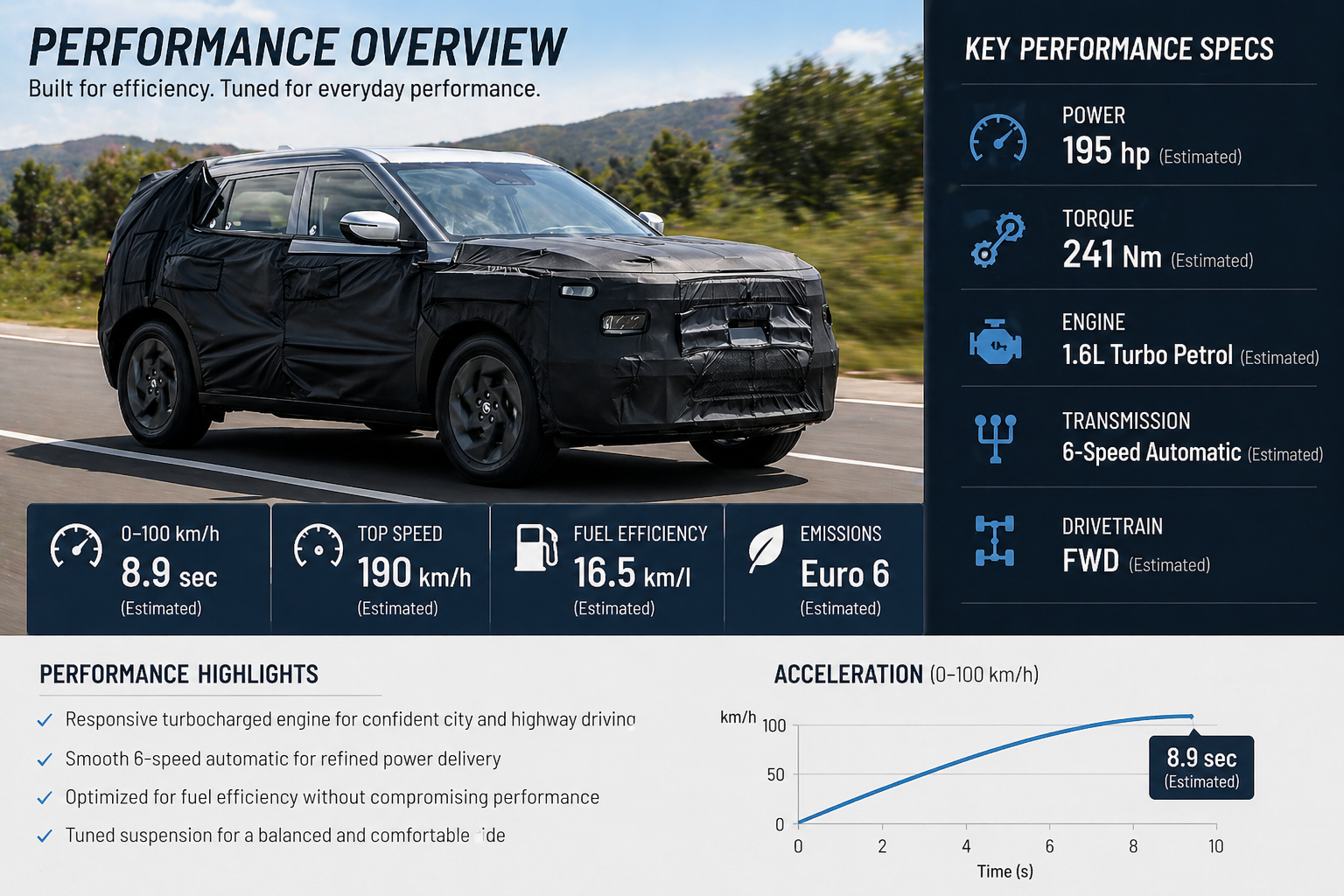
Carryover engines: The 1.5L NA petrol (115 PS), 1.5L turbo-petrol (160 PS), and 1.5L diesel (116 PS) will continue. All will be E20 compliant and RDE2 Phase-2 ready. 6-speed manual, IVT, 7-DCT, and 6-AT options stay.
The new addition: Strong Hybrid. This is the big one. Hyundai is developing a 1.5L petrol + electric motor combo, likely producing ∼140 PS combined. Mileage? Expect 24-27 kmpl claimed. That directly targets the Grand Vitara and Hyryder, which are eating into Creta’s diesel sales.
Will diesel die? Not immediately. Tier-2 and Tier-3 cities, plus fleet buyers, still love diesel torque and highway mileage. But the hybrid will be the new “default choice” for city buyers.
Creta N Line: The turbo-petrol will get a sportier N Line version again, with stiffer suspension, louder exhaust, and red accents. For people who want a Creta but don’t drive like their dad.
Creta EV: Not at launch, but the platform is ready. Expect it in late 2026 or 2027 with a 45-50 kWh battery and 400+ km real range.
6. Launch Timeline and Price Expectation
Global debut: Hyundai usually shows new cars in Korea first. Watch for a reveal in Q4 2025, possibly at the Seoul Mobility Show.
India launch: March-April 2026 is the safest bet. Hyundai likes to launch before the new financial year.
Nepal launch: Lakshmi Hyundai typically brings new models 2-3 months after India. So, May-June 2026 for Nepal.
Price: This is where you feel the pinch. New platform + more size + more tech = more money.
Current Creta: INR 11.00 – 20.15 lakh ex-showroom.
Third-gen estimate: INR 12.00 – 23.50 lakh ex-showroom.
In Nepal, after taxes and duties, that translates to roughly NPR 40 lakh to NPR 78 lakh. The hybrid will sit 1.5-2 lakh above the equivalent petrol, but you’ll save that in fuel within 3-4 years if you drive 15,000 km yearly.
Final Thought: The Segment Leader Refuses to Sit Still
The compact SUV space is brutal. A new model pops up every 6 months. Yet the Creta has stayed on top because Hyundai updates it before people even start complaining.
With a new platform, bigger dimensions, hybrid tech, and a proper luxury-car interior, the third-gen Creta isn’t just defending its crown. It’s trying to move the goalpost entirely.
If Hyundai prices it right and they usually do the rest of the segment is going to spend 2026 playing catch-up.

