Vehicle Tax in Nepal: How to Check Your Due Date in the Bluebook
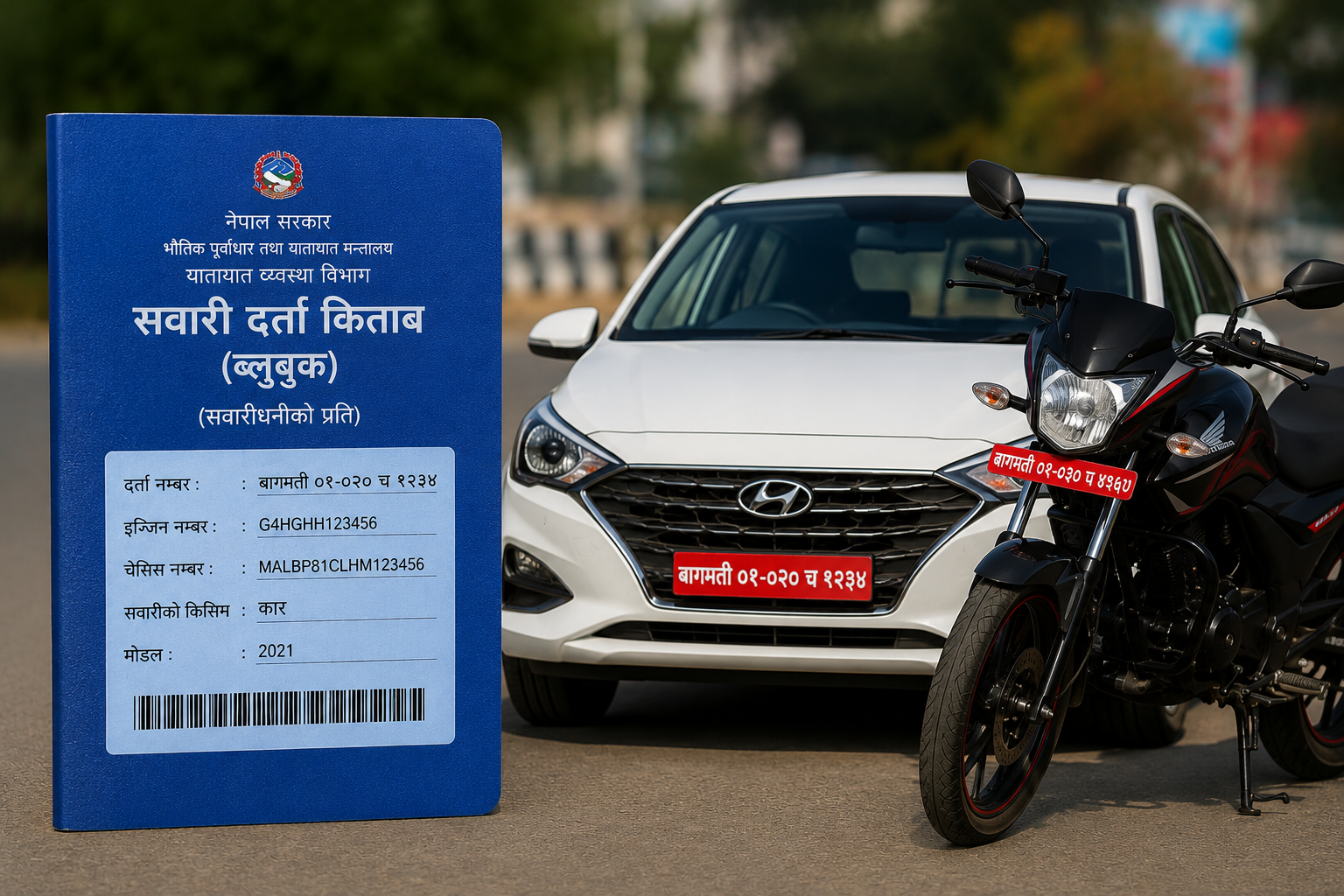
Highlights
-
Vehicle tax in Nepal must be renewed within the prescribed period to avoid penalties.
-
Both motorcycles and cars are subject to annual road tax payments.
-
Delayed tax payments can result in significant fines and additional charges.
-
Your vehicle's Bluebook contains important information about tax validity and renewal dates.
-
Paying taxes on time helps avoid legal complications during ownership transfer, insurance claims, and vehicle inspections.
-
Many vehicle owners unknowingly pay extra penalties simply because they do not check their renewal dates regularly.
Table of Contents
-
Introduction
-
What Is Vehicle Tax in Nepal?
-
Why Paying Vehicle Tax on Time Is Important
-
When Should You Pay Vehicle Tax?
-
How to Check Your Vehicle Tax Due Date in the Bluebook
-
What Happens If You Miss the Tax Renewal Deadline?
-
Late Payment Fines and Penalties
-
Where Can You Pay Vehicle Tax in Nepal?
-
Documents Required for Tax Renewal
-
Common Mistakes Vehicle Owners Make
-
Tips to Avoid Vehicle Tax Penalties
-
Frequently Asked Questions
-
Conclusion
Introduction
Owning a vehicle in Nepal comes with responsibilities beyond regular maintenance, fuel costs, and insurance. One of the most important obligations is paying vehicle tax on time.
Despite being a routine requirement, many vehicle owners often forget their renewal dates. Some realize the tax has expired only when they need to renew insurance, sell the vehicle, or visit the transport office. By then, penalties may have already accumulated.
Whether you own a motorcycle, scooter, car, jeep, van, pickup, or electric vehicle, understanding how vehicle tax works can save you money, time, and unnecessary stress.
This guide explains when vehicle tax should be paid, how to check the due date through the Bluebook, and what happens if you miss the renewal deadline.
What Is Vehicle Tax in Nepal?
Vehicle tax, often referred to as road tax, is an annual fee collected by provincial governments from vehicle owners.
The money collected through vehicle taxation helps support transportation infrastructure, road maintenance, traffic management systems, and public services related to transportation.
Every registered vehicle operating on public roads is required to have its tax paid and updated according to government regulations.
The amount payable depends on several factors, including:
-
Vehicle type
-
Engine capacity
-
Fuel type
-
Vehicle category
-
Province of registration
-
Vehicle age
Since provincial governments manage transport taxation, rates may vary slightly depending on the province.
Why Paying Vehicle Tax on Time Is Important
Many people think vehicle tax is just another annual expense. In reality, timely tax payment affects several aspects of vehicle ownership.
Legal Compliance
Driving a vehicle with expired tax documents may create legal complications during inspections or traffic checks.
Insurance Claims
Some insurance-related processes may require updated tax records and valid vehicle documents.
Vehicle Transfer
If you plan to sell your vehicle, unpaid taxes and penalties must usually be cleared before ownership transfer can proceed.
Avoiding Additional Costs
The biggest reason to renew on time is simple: penalties can become expensive over time.
A tax bill that could have been paid within minutes can become significantly larger once fines are added.
When Should You Pay Vehicle Tax?
Vehicle tax is generally renewed annually.
The exact renewal date depends on the date recorded in your vehicle's Bluebook.
Many vehicle owners mistakenly assume taxes are renewed based on the Nepali New Year or the fiscal year. However, the renewal schedule is determined by the validity period mentioned in the Bluebook.
Because renewal periods vary from vehicle to vehicle, it is important to regularly check the expiry date rather than relying on memory.
A good practice is to check your Bluebook at least a month before the expected renewal period.
How to Check Your Vehicle Tax Due Date in the Bluebook
Your Bluebook contains all essential registration and tax information.
To check the tax due date:
Step 1: Open the Bluebook
Locate the section that records tax payments and validity periods.
Step 2: Check the Latest Tax Entry
Look for the most recent tax payment record.
Step 3: Find the Expiry Date
The validity period or expiry date will indicate until when the tax remains valid.
Step 4: Plan Ahead
If the expiry date is approaching, prepare the necessary documents and make arrangements for renewal before the deadline.
Many vehicle owners only discover their tax has expired months ago because they rarely open their Bluebook.
A quick annual check can prevent unnecessary fines.
What Happens If You Miss the Tax Renewal Deadline?
Missing the renewal deadline does not automatically cancel vehicle registration. However, penalties begin to accumulate according to government regulations.
The longer the delay, the higher the amount you may need to pay.
For example:
-
A few months late may result in a manageable penalty.
-
Multiple years of non-payment can create a much larger financial burden.
In addition to fines, administrative procedures can become more complicated if taxes remain unpaid for extended periods.
This is particularly problematic when selling a vehicle or renewing other documents.
Late Payment Fines and Penalties
Vehicle tax penalties are designed to encourage timely payment.
The exact penalty structure may change according to government policies and provincial regulations.
Generally, penalties are calculated based on:
-
Duration of delay
-
Outstanding tax amount
-
Applicable provincial rules
Because regulations can be updated periodically, vehicle owners should verify current penalty rates with the relevant provincial transport office before making payments.
The most important point is that delaying payment almost always costs more than renewing on time.
Where Can You Pay Vehicle Tax in Nepal?
Vehicle taxes can generally be paid through:
Transport Management Offices
Provincial transport offices remain the primary location for tax renewal.
Revenue Collection Centers
Many provinces operate authorized tax collection centers.
Banking Partners
Certain government-approved banks facilitate tax payments.
Digital Services
Some provinces have introduced online systems that allow vehicle owners to check information and make payments electronically.
Digital services continue to expand, making tax renewal more convenient than in previous years.
Before visiting an office, it is advisable to check whether online options are available in your province.
Documents Required for Tax Renewal
Although requirements may vary slightly, vehicle owners are commonly asked to provide:
-
Original Bluebook
-
Citizenship certificate or identification
-
Vehicle owner's details
-
Insurance documents (if required)
-
Previous tax payment records
Keeping these documents organized can significantly speed up the renewal process.
Common Mistakes Vehicle Owners Make
Forgetting Renewal Dates
This remains the most common reason for penalties.
Misplacing the Bluebook
Without the Bluebook, verifying tax status becomes more difficult.
Assuming Someone Else Has Paid
Vehicles owned jointly by family members often face confusion regarding responsibility for tax payment.
Waiting Until Ownership Transfer
Some owners delay tax renewal because they plan to sell the vehicle soon. Unfortunately, unpaid taxes must usually be cleared before transfer can occur.
Ignoring Small Penalties
Minor penalties can grow over time, making eventual payments much more expensive.
Tips to Avoid Vehicle Tax Penalties
Set a Calendar Reminder
Create reminders one month before the expected renewal date.
Keep Digital Copies
Store scanned copies of important vehicle documents.
Check the Bluebook Regularly
Review tax validity whenever you renew insurance or perform major servicing.
Renew Early
Avoid waiting until the final day.
Stay Updated on Provincial Rules
Tax regulations occasionally change, so staying informed can help you avoid surprises.
Frequently Asked Questions
Is vehicle tax mandatory in Nepal?
Yes. All registered vehicles operating on public roads must pay applicable taxes.
How often must vehicle tax be renewed?
Typically once every year according to the validity period recorded in the Bluebook.
Can I pay vehicle tax online?
In some provinces, online services are available. Availability depends on local government systems.
What happens if I don't pay vehicle tax for several years?
Penalties accumulate, and additional administrative complications may arise when renewing documents or transferring ownership.
Does every province have the same tax rate?
No. Tax structures may vary depending on provincial regulations.
Conclusion
Vehicle tax renewal may seem like a small administrative task, but neglecting it can lead to unnecessary expenses and complications. A simple habit of checking your Bluebook regularly can help you stay ahead of deadlines and avoid penalties.
Whether you own a motorcycle for daily commuting or a family car for long-distance travel, keeping your tax records updated ensures legal compliance and smoother vehicle ownership. The few minutes spent checking your renewal date today could save you a considerable amount of money tomorrow.
If you're unsure about your vehicle's tax status, take out your Bluebook, review the latest entry, and confirm the validity period. Staying informed is the easiest way to keep your vehicle paperwork in order and avoid last-minute surprises.

