What Does NCAP Safety Rating Mean and Why Should You Care?
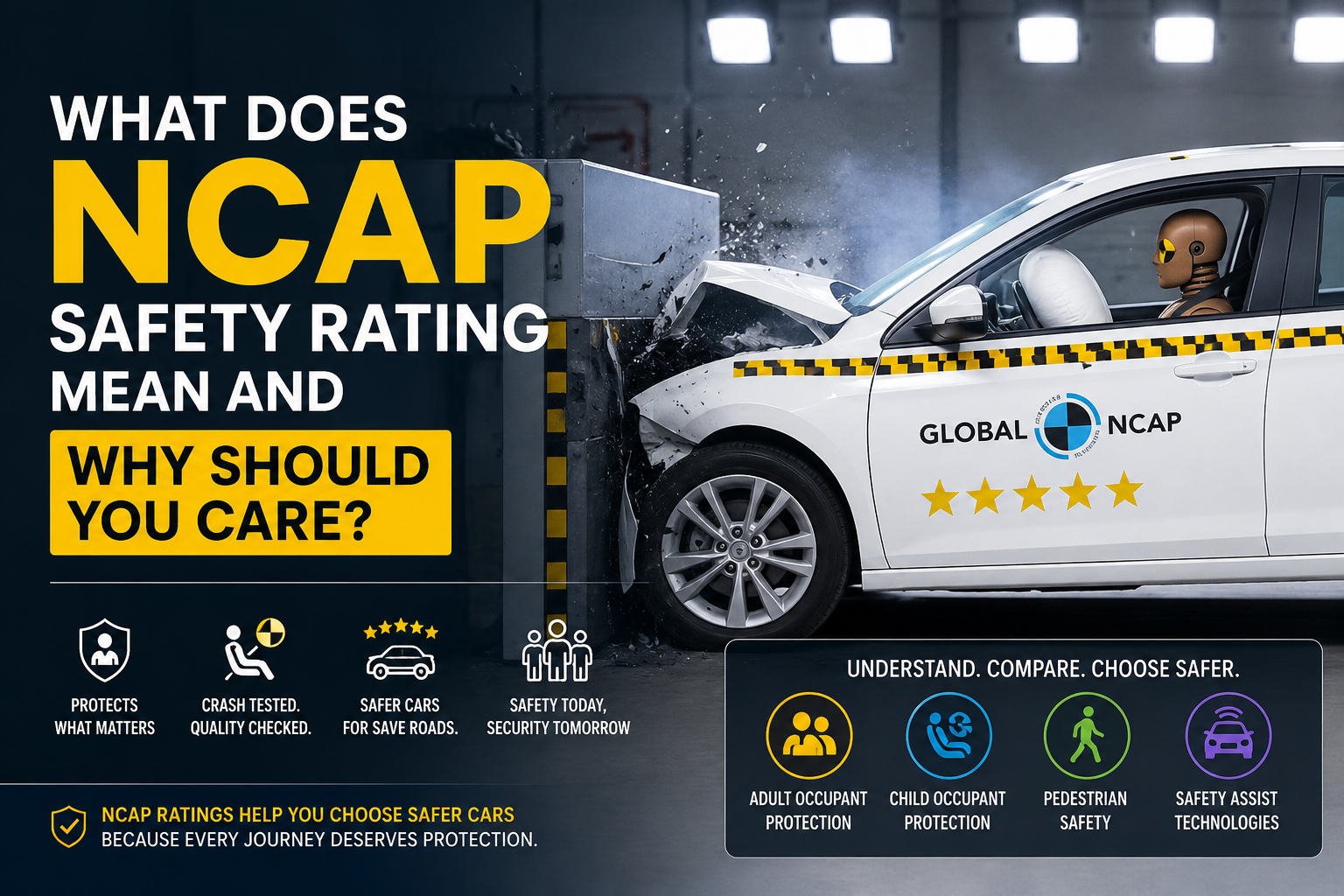
Introduction
When people buy a car, they often compare fuel efficiency, engine performance, maintenance costs, and resale value. While these factors are important, there is one aspect that can have a far greater impact on your life than all the others combined: safety.
Most drivers never expect to be involved in a serious accident. Unfortunately, accidents happen every day. Road conditions, weather, driver error, mechanical failures, and unexpected situations can quickly turn a normal journey into a dangerous one.
This is where NCAP safety ratings become extremely important.
You may have seen advertisements proudly claiming that a vehicle has received a 5-star NCAP safety rating. You may also have heard discussions about certain vehicles receiving poor crash-test results. But what do these ratings actually mean, and why should they influence your purchasing decision?
Understanding NCAP ratings can help you choose a vehicle that not only looks good and performs well but also provides better protection when it matters most.
Key Highlights
- What NCAP stands for and how it works
- How crash tests are conducted
- Understanding star ratings from 0 to 5
- Why safety ratings matter in real-world accidents
- Important safety features to look for
- Common myths about vehicle safety
- Why Nepali car buyers should pay attention to NCAP scores
Table of Contents
- Introduction
- What Is NCAP?
- How NCAP Safety Testing Works
- Understanding NCAP Star Ratings
- Safety Features That Influence Ratings
- Why NCAP Ratings Matter More Than Ever
- Common Misconceptions About Vehicle Safety
- How NCAP Ratings Help Nepali Buyers
- Things to Check Beyond the Safety Rating
- Conclusion
What Is NCAP?
NCAP stands for New Car Assessment Program.
It is an independent vehicle safety testing program designed to evaluate how well a vehicle protects its occupants during different types of crashes. The goal is simple: provide consumers with reliable information about vehicle safety before they make a purchase.
Various NCAP organizations operate around the world, including:
- Global NCAP
- Euro NCAP
- ASEAN NCAP
- Latin NCAP
- Australasian NCAP
- Bharat NCAP
Although testing procedures may vary slightly between organizations, the objective remains the same: measure a vehicle's ability to protect people during accidents.
Before NCAP programs existed, consumers had very little information about how vehicles would perform during crashes. Today, buyers can compare safety performance just as easily as they compare mileage or price.
How NCAP Safety Testing Works
Many people assume that safety ratings are based on manufacturer claims. In reality, vehicles undergo carefully controlled crash tests that simulate real-world accident scenarios.
Engineers analyze how the vehicle structure reacts during impacts and how effectively safety systems protect passengers.
Common tests include:
Frontal Impact Test
This simulates a head-on collision, one of the most severe types of accidents.
The vehicle is crashed into a deformable barrier at a specified speed while sensors inside crash-test dummies measure forces experienced by different body parts.
Side Impact Test
Side collisions can be particularly dangerous because there is less space between occupants and the point of impact.
The test measures how well doors, side structures, and airbags protect passengers.
Pole Impact Test
This evaluates protection when a vehicle strikes a narrow object such as a utility pole or tree.
Child Occupant Protection
Vehicles are tested to determine how effectively they protect children using approved child restraint systems.
Safety Assist Technologies
Modern testing increasingly evaluates advanced safety systems such as:
- Electronic Stability Control (ESC)
- Autonomous Emergency Braking (AEB)
- Lane Keeping Assistance
- Seatbelt Reminders
- Speed Assistance Systems
The final rating reflects overall safety performance across multiple categories.
Understanding NCAP Star Ratings
One of the easiest parts of NCAP testing for consumers to understand is the star rating system. Vehicles are typically awarded between zero and five stars based on their performance in various crash tests and safety assessments.
5-Star Rating
A five-star rating represents the highest level of safety currently available. These vehicles generally offer excellent protection for adult occupants, strong child occupant protection, and a range of active safety features designed to help prevent accidents before they occur.
Many modern vehicles that achieve five stars combine strong structural engineering with technologies such as multiple airbags, electronic stability control, and advanced driver assistance systems.
4-Star Rating
Four-star vehicles still provide good protection and are often considered safe choices. However, they may lack some advanced safety technologies or perform slightly less effectively in certain crash scenarios.
3-Star Rating
A three-star rating indicates average safety performance. While these vehicles may meet basic safety standards, they generally provide less protection compared to higher-rated alternatives.
2-Star Rating
Vehicles with two stars typically show significant weaknesses in crash protection or lack important safety features that have become standard in safer vehicles.
1-Star and 0-Star Ratings
These ratings indicate serious safety concerns. Such vehicles may provide limited protection in crashes and are generally not recommended when safer alternatives are available.
It is important to remember that even a one-star vehicle may meet minimum legal requirements in some markets. However, legal compliance and excellent safety are not always the same thing.
Safety Features That Influence NCAP Ratings
A vehicle's safety rating is not determined by a single factor. Instead, it reflects the combined performance of multiple systems working together.
Structural Strength
The vehicle's body structure acts as the first line of defense during a crash.
A strong structure helps absorb and distribute impact forces while maintaining survival space for occupants. Vehicles with weak structures may collapse more severely during accidents, increasing the risk of serious injuries.
Airbags
Modern vehicles often include:
- Front airbags
- Side airbags
- Curtain airbags
- Knee airbags
Airbags work together with seatbelts to reduce the risk of severe injuries during collisions.
Seatbelts
Even the safest vehicle cannot fully protect occupants who are not wearing seatbelts.
Advanced seatbelt systems include:
- Pretensioners
- Load limiters
- Seatbelt reminders
These technologies help reduce injury risk during sudden impacts.
Electronic Stability Control (ESC)
ESC is one of the most effective safety technologies ever developed.
It helps drivers maintain control of the vehicle during emergency maneuvers and slippery conditions, significantly reducing the risk of rollovers and loss-of-control accidents.
Anti-Lock Braking System (ABS)
ABS prevents wheels from locking during hard braking, helping drivers maintain steering control while reducing stopping distances in many situations.
Autonomous Emergency Braking (AEB)
Some newer vehicles can automatically apply the brakes when they detect an imminent collision. This technology can help avoid accidents entirely or reduce their severity.
Why NCAP Ratings Matter More Than Ever
Many buyers assume that modern cars are automatically safe. While vehicle safety has improved significantly over the years, there are still substantial differences between models.
Two vehicles may look similar from the outside, yet perform very differently during crash tests.
Real Lives Are Involved
Safety ratings are not simply numbers on a brochure. They represent how well a vehicle can protect real people.
In a serious accident, a stronger structure, better airbags, and advanced safety systems can mean the difference between minor injuries and life-changing consequences.
Road Conditions Are Unpredictable
Nepal presents unique driving challenges:
- Narrow mountain roads
- Unpredictable weather
- Heavy urban traffic
- Poor road surfaces in some regions
- Mixed traffic involving cars, motorcycles, buses, and pedestrians
Even skilled drivers cannot control every situation they encounter. Choosing a safer vehicle adds an extra layer of protection.
Family Protection
Many buyers focus on comfort and features for their families but overlook safety ratings.
If you regularly travel with children, parents, or other loved ones, safety should be one of the most important considerations during the buying process.
Common Misconceptions About Vehicle Safety
"Bigger Vehicles Are Always Safer"
Size can help in some situations, but vehicle design matters far more.
A well-engineered compact car with a five-star rating may provide better protection than a poorly designed larger vehicle.
"I Am a Good Driver, So Safety Doesn't Matter"
Even excellent drivers cannot control the actions of others.
Many accidents occur because of mistakes made by another road user.
"Airbags Alone Make a Car Safe"
Airbags are important, but they are only one part of a complete safety system.
Structural strength, seatbelts, stability control, and crash energy management all play crucial roles.
"Safety Features Are Only Needed for Highways"
Many accidents occur close to home and at relatively low speeds.
Safety features provide benefits in urban traffic, rural roads, and highways alike.
How NCAP Ratings Help Nepali Buyers
The automotive market in Nepal has evolved rapidly in recent years. Buyers now have access to a wide range of vehicles, including:
- Petrol cars
- Diesel vehicles
- Hybrid models
- Electric vehicles
With so many choices available, safety ratings provide an objective way to compare vehicles.
Better Long-Term Value
A safer vehicle may cost slightly more initially, but the additional protection can be invaluable.
Many buyers are beginning to view safety as an investment rather than an expense.
Greater Awareness
Consumer awareness is increasing throughout Nepal.
Buyers are asking more informed questions about:
- Airbags
- Structural safety
- Crash-test results
- Electronic stability systems
- Advanced driver assistance technologies
This trend is encouraging manufacturers to improve safety standards across the market.
More Informed Buying Decisions
Instead of relying solely on marketing claims, buyers can use NCAP results to evaluate actual performance under crash conditions.
This creates greater transparency and helps consumers make smarter decisions.
Things to Check Beyond the Safety Rating
Although NCAP ratings are extremely useful, they should not be the only factor in your decision.
Consider the following:
Number of Airbags
Compare airbag availability across variants. Sometimes higher trims include additional protection.
Electronic Stability Control
This feature can be just as important as airbags in preventing accidents.
Child Seat Compatibility
Families should check for ISOFIX child seat anchor points and child occupant protection ratings.
Tire Quality
Even the safest vehicle depends on proper tires for grip and control.
Maintenance and Condition
For used cars, vehicle condition is critical.
A car that was originally safe may no longer perform as intended if it has been poorly repaired after an accident.
Driver Behavior
No safety technology can replace responsible driving.
Following speed limits, wearing seatbelts, avoiding distractions, and maintaining safe distances remain essential.
Conclusion
NCAP safety ratings have transformed the way people evaluate vehicles. They provide clear, independent information about how well a car can protect its occupants during real-world crash scenarios.
While price, mileage, design, and features are important, safety should never be treated as an afterthought. A vehicle's ability to protect you and your passengers may be the most important feature it offers.
For buyers in Nepal, NCAP ratings are becoming increasingly valuable as the market expands and consumers gain access to more vehicle choices than ever before. Whether you are purchasing your first car, upgrading your family vehicle, or considering an electric vehicle, taking a few minutes to check the safety rating can help you make a more informed decision.
At the end of the day, a vehicle is more than just transportation. It carries the people who matter most to you. Choosing a safer vehicle is one of the smartest investments you can make for yourself and your family.
Before your next vehicle purchase, don't just ask how fast it is, how many features it has, or how much fuel it consumes.

