What is a Front Center Airbag? How New Tech Prevents Passenger Collisions
What is a Front Center Airbag? How New Tech Prevents Passenger Collisions
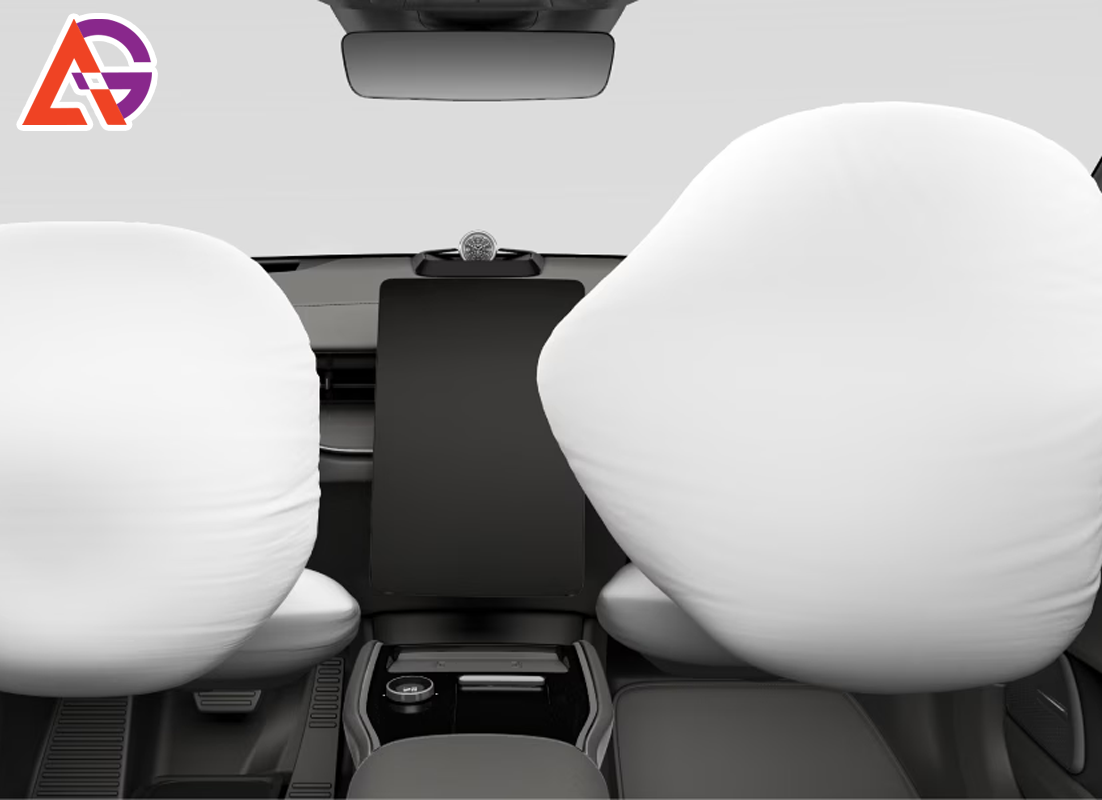
We've been told for decades that airbags, those concealed cushions that explode out of the dashboard or steering wheel to protect us from a frontal collision, are our second line of defense. However, as car engineering has developed, safety specialists have discovered a horrifying vulnerability. Sometimes the person seated next to you poses a greater risk in a side-impact crash, sometimes known as a "T-bone" accident, than the door collapsing inward.
Put the airbag in the front center. Quietly, this relatively new technology is emerging as the "gold standard" for vehicle safety ratings in 2026. This is probably one of the items you're paying for if you've just gone car shopping and observed that safety packages are more expensive. What precisely is it, though, and how does it stop "human-on-human" collisions during an accident?
The Anatomy of an Accident: Why Side Impacts Are So Deadly
To understand why we need a center airbag, we first have to look at the physics of a side-impact crash. When a vehicle is struck from the side (known as the "near side"), the curtain and side airbags deploy to protect the person closest to the impact.
However, there is another victim: the "far-side" occupant. If you are the driver and your car is hit on the passenger side, your body is violently thrown toward the center of the car. Without a barrier, two things often happen:
- Occupant-to-Occupant Collision: Your head or shoulders slam into the passenger next to you. This "clashing" of heads is responsible for a significant percentage of traumatic brain injuries in multi-passenger accidents.
- Interior Impact: Even if you’re alone, you can be thrown so far across the cabin that you strike the center console, the opposite door, or the passenger seat frame.
Recent data shows that nearly 30% of serious injuries in side-impact crashes occur on the "far side" of the vehicle. Traditional airbags simply weren't designed to catch you as you fly sideways across the car. For decades, we’ve been told that airbags are our secondary line of defense those hidden cushions that burst out of the steering wheel or the dashboard to save us from a frontal impact. But as automotive engineering has evolved, safety experts noticed a terrifying gap in protection. In a side-impact collision, or a "T-bone" accident, the biggest danger isn't always the door crumpling inward; sometimes, it’s the person sitting right next to you. Enter the front center airbag. This relatively new piece of technology is quietly becoming the "gold standard" for 2026 vehicle safety ratings. If you've been car shopping lately and noticed a higher price tag on safety packages, this is likely one of the features you're paying for. But what exactly is it, and how does it prevent the "human-on-human" collisions that occur during an accident?
How the Front Center Airbag Works
Unlike your steering wheel airbag, the front center airbag is usually tucked away inside the inboard side of the driver’s seat back. When sensors detect a moderate-to-severe side impact or a rollover event, the airbag inflates in a fraction of a second roughly 1/20th of a second, to be precise. It expands upward and forward, filling the void between the two front seats.
Key Engineering Features:
Vertical Deployment: It forms a tall, sturdy pillar of air that spans from the center console to the roofline.
Curved Design: Modern 2026 designs use a slightly curved shape to "cradle" the driver, ensuring they stay centered in their seat rather than sliding out from under the seatbelt.
Pressure Management: Because it has to stop two human bodies from colliding, it is often firmer than a frontal airbag, designed to absorb the kinetic energy of two people at once.
Why 2026 is the Year of the Center Airbag
In the ever-evolving landscape of automotive safety, 2026 has officially arrived as the defining year for the front center airbag, a technology that shifted from a luxury novelty to a non-negotiable standard for any vehicle aiming for a five-star rating. This surge is largely driven by a massive overhaul in global safety protocols, most notably by Euro NCAP and ANCAP, which introduced their most significant testing revisions in over a decade. These new "Stages of Safety" protocols now specifically scrutinize "far-side occupant protection," forcing manufacturers to address the violent reality of T-bone collisions where passengers are often thrown across the cabin into each other. While side-impact airbags have long protected us from the doors and pillars of our own cars, 2026 is the year the industry finally acknowledged that our fellow passengers can become accidental hazards in a crash. By deploying a pressurized cushion between the driver and the front passenger, this "center side" airbag effectively eliminates the risk of traumatic head-to-head contact, a leading cause of severe brain injuries that traditional safety systems simply couldn't reach.
The transition we are seeing this year isn't just about adding more air; it’s about the integration of "intelligent" restraint systems that reflect our modern, tech-heavy driving environment. As we move through 2026, the center airbag is being paired with sophisticated in-cabin sensors that monitor occupant size, posture, and even whether someone is leaning out of position to reach for a touchscreen. This means the car doesn't just fire an airbag; it calculates the exact force needed to keep you centered in your seat based on your physical stature. For car buyers today, the presence of a center airbag has become a primary shorthand for a vehicle's engineering maturity. Brands like Volvo, Tesla, and Hyundai have made these systems standard to maintain their competitive edge, while mass-market manufacturers are racing to retrofit their lineups to avoid the "safety stigma" of a four-star rating. Ultimately, 2026 will be remembered as the year we stopped looking only at the "near side" of a crash and started protecting the entire human ecosystem within the car, making our daily commutes safer for everyone on board.
Beyond the Center Airbag: The Future of Collision Prevention
While the center airbag is a critical last line of defense, the true "holy grail" of 2026 automotive safety lies in technologies that prevent the metal from ever bending in the first place. We are currently witnessing a massive shift from passive protection to "predictive awareness," where cars use Vehicle-to-Everything (V2X) communication to "talk" to the world around them. Imagine your car receiving a silent alert from a traffic light three blocks away or a hidden vehicle around a blind corner, allowing your onboard AI to adjust your speed before a hazard even enters your line of sight. Beyond digital communication, 2026 has introduced External Airbags pioneered by innovators like ZF and Mercedes-Benz which deploy from the vehicle's side sills or hood milliseconds before a collision to absorb kinetic energy and protect pedestrians. Inside the cabin, Advanced Occupant Monitoring now uses infrared sensors to track your vitals and posture, ensuring that if you do face an impact, the car's steering-based Autonomous Emergency Steering (AES) and adaptive braking systems react with millisecond precision tailored specifically to your body's position. This holistic ecosystem of 5G-enabled sensors and thermal imaging doesn't just make crashes more survivable; it aims to make them a relic of the past by turning every vehicle into a proactive guardian of the road.

